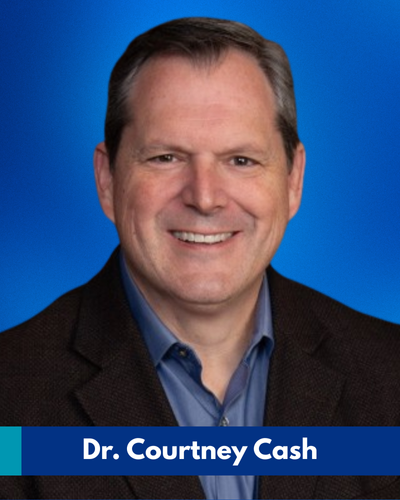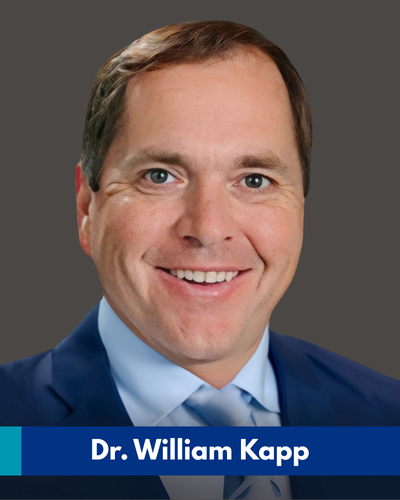

In this special interview, we learn how Tony and David’s targeted efforts not only boost nutrition worldwide but promote peace and prosperity for all. They are both using their incredible skill sets and platforms to end global hunger. Just recently, Tony launched The 100 Billion Meals Challenge, an initiative to support feeding some of the most vulnerable communities on Earth where conflict, drought, fertilizer shortages and climate change threaten food security.
A conversation with Tony Robbins and David Beasley
Over the past decade, as civil conflict, climate change and COVID-19 wreaked havoc on world economies and societies, communities facing hunger have grown exponentially. In turn, as we look toward a new year, the most devastating food crisis since World War II is upon us.
In light of these frightening realities, David Beasley, former governor of South Carolina and executive director of the United Nations World Food Programme, is teaming up with business strategist, entrepreneur and philanthropist Tony Robbins to end global hunger. David mobilizes financial support, raises public awareness and designs a global strategy to get food into people’s mouths, faster. Meanwhile, drawing from his own childhood growing up in a food- insecure household, Tony has spent the last three decades helping provide over 935 million meals to those in need.
In issue 10 of CuraLink, we learn how food is the pathway to peace and how the ultimate solution to poverty and food insecurity requires both charity and the private sector.

Tony Robbins, life and business strategist, #1 New York Times best-selling author, entrepreneur and philanthropist
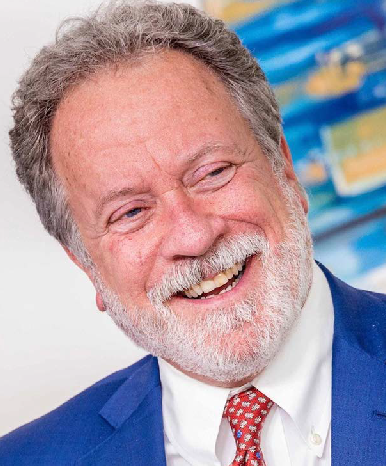
David Beasley, Executive Director, United Nations World Food Programme
Tony, what was it like growing up in a food-insecure household? How did that experience shape your outlook today?
I grew up in a really tough environment. My family wouldn’t have starved, but we were chronically hungry. My life changed one Thanksgiving day when I heard a knock at the door. My parents were fighting, so I opened the door, and there was a stranger holding two giant bags of groceries and an uncooked turkey. He asked, “Is your father here?” I ran to get my dad. I couldn’t wait to see his face when he saw that we were going to have this incredible Thanksgiving.
My dad came to the door, saw the man and said, “What do you want? We don’t accept charity.” Then as he tried to slam the door, it bounced open off the man’s shoulder.
He said, “Sir, I’m just the delivery guy. Everybody has a tough time, and they know you’re having a tough Thanksgiving. They want your family to do well.”
My dad tried to slam the door again, but this time it bounced off the delivery man’s foot. He said, “Sir, please don’t let your ego get in the way of taking care of your family.”
The veins on both sides of my father’s neck got big, and he turned bright red. I thought he was going to punch the man. And then his shoulders just dropped. He took the groceries, slammed the door and never said thank you. It turned out to be one of the worst days of my life but, later on, I realized it was one of the best. I learned I wanted to help as many other families like mine as possible.
Tony, what initially inspired your commitment to the 1 Billion Meals Challenge with Feeding America? What has continually propelled you to combat food insecurity in the United States?
Now, I look at the pain of that experience as a kid differently. It shaped my entire life. It’s why I am where I am today. I learned that strangers care. The food was important, but what was more important was the gift from somebody who didn’t want credit for helping a stranger. It made me care about strangers, and it’s been the essence of my life ever since.
When I was seventeen, I didn’t have much money, but I went to the store and filled two grocery carts with food and gave it to a couple of families in need. And the next year it was four, and then it was eight. And then it got to a million meals, then 2 and 4 million per year, then eventually a total of 42 million meals provided.
In the early 1980s, I watched Congress cut the food stamp program, now called SNAP, by almost $7 billion. When you crunch the numbers, that meant that every family who received support from the program needed to go without meals for one week out of every month. I knew that the private sector needed to step in, so I got my companies involved. I started really small, and now I’m fortunate enough to have 110 companies, which do about $7 billion in business.
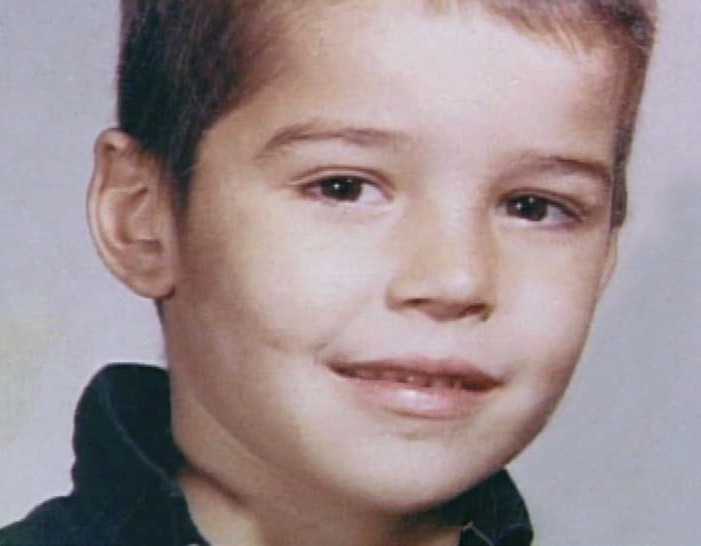
Tony Robbins grew up in a food-insecure household, an experience which fuels his passion to give back to families like his and end hunger for all
I thought, “Well, what if I could provide 50 million meals in a year?” That would be incredible, as much as I’ve done in my whole life. What if I could provide 100 million meals in a year? What if I do 100 million meals for 10 years? We could provide a billion meals. It’s going to remind people that strangers care. I’m proud to tell you that we are going to hit a billion meals this year, for which I am really grateful.
David, the United Nations World Food Programme (WFP) has been widely recognized for its efforts combating global hunger. In 2020, the organization was awarded the Nobel Peace Prize for its work while under your leadership. What inspired you to take the role leading the WFP?
When I was first approached about the role, I knew very little about the United Nations World Food Programme. My knee-jerk reaction was more about the U.N. system—from an outsider’s perspective. I expected high standards and had high hopes for the U.N., but my limited knowledge was that it was not as effective as it should or could be. I had to ask a lot of people a lot of questions. But everyone was telling me, “Oh my gosh, the World Food Programme is different. They’re efficient, they’re strategic, they get it done, they’re not bureaucratic.” And a lot of people said, “You know, you’re the only one who can talk the U.S. out of cutting funding. And if you don’t, we’re going to have destabilization, war, conflict and mass migration.”
David, how many people are dealing with food insecurity annually worldwide? What are the major downstream effects of this issue?
When I took this job in 2017, there were about 80 million people worldwide facing severe hunger— as we would say, marching toward starvation.
Right before the COVID-19 pandemic, that number had risen to 135 million people. Why? Man-made conflict and climate shocks. Then COVID-19 comes along—bringing economic devastation—and that number shot up from 135 million to 276 million people over a two-year period. Now on top of all that, the conflict in Ukraine has impacted fuel and fertilizer supplies around the world, and as a result, today we have 349 million people in the world marching toward starvation, with 49 million of them literally knocking on famine’s door.
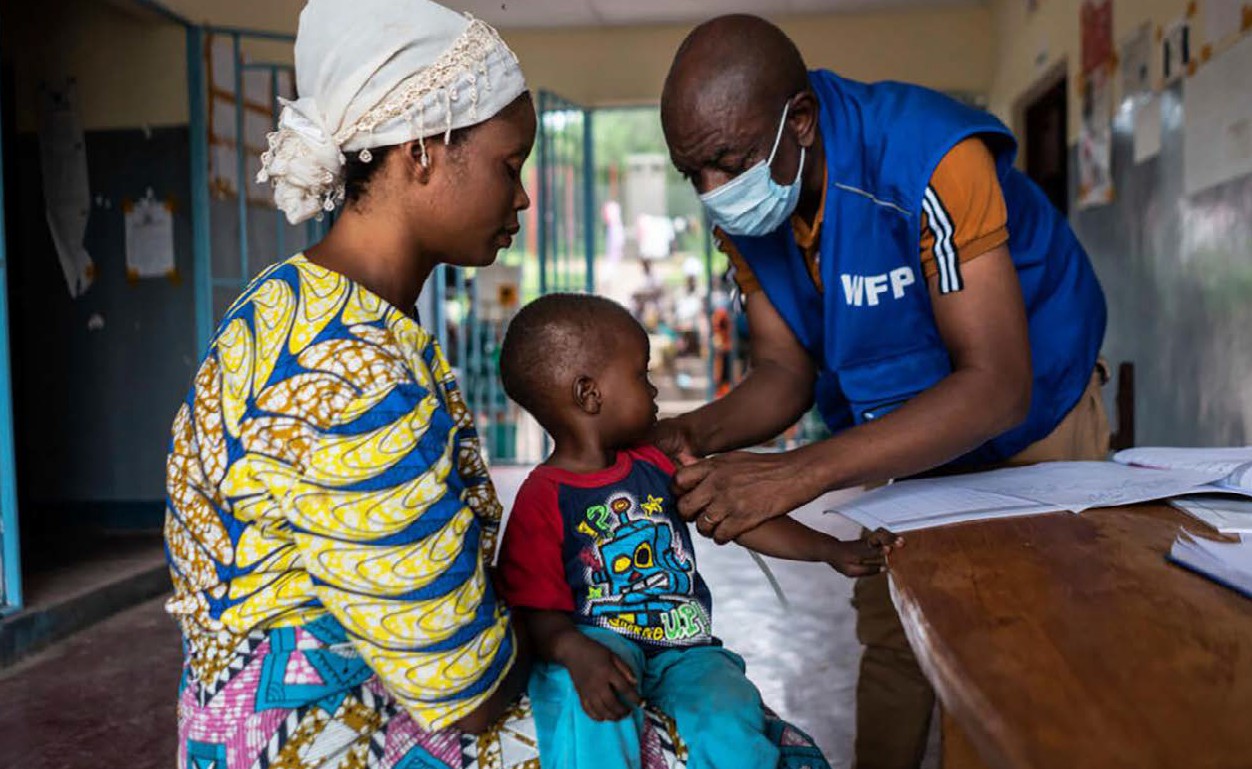
Photo of the WFP’s on the ground efforts to divert famine and protect the health of individuals worldwide
At the start of 2022, I was warning that we would soon be facing the world’s worst humanitarian crisis since World War II, and, unfortunately, I have been proven right. We need strong leadership to solve this urgent crisis, and if we don’t succeed, I can assure you that what we are facing right now in terms of rising hunger is nothing compared to what we will face next year. As I have been telling world leaders, if we don’t take urgent action, today’s food pricing crisis will become a food availability crisis.
Tony, even as one of the wealthiest countries on Earth, 1 in 8 households in the United States is food insecure. From your perspective, what are the major factors driving the American hunger problem?
Unfortunately, many people in the U.S. struggle to meet their basic needs, which increases their risk of food insecurity. Layoffs, unexpected bills or on-the-job accidents can suddenly force families to choose between buying food and paying bills. I read a statistic the other day that 49% of Americans don’t have $400 to spare.
The factors playing into this are complex but the answer is simple: Individuals and the private sector must step in to bridge the gap, especially in the U.S.
Tony, how much progress has been made to address food insecurity in the U.S. over the past decade? How does it feel to have helped provide over 935 million meals to individuals and families in need?
Over the last decade, millions of Americans have experienced some amount of food insecurity. In 2021, 10.2% of households in the U.S. were food insecure. We’ve seen the line of food insecurity rise and fall again and again like a roller coaster over the last decade. Thankfully right now we are in a decline, but with the current climate, the repercussions of COVID-19 and the political state, we can only guess what we might see.
I am grateful to have a great partner in Feeding America. Last year, they secured 2 billion pounds of food for the first time. That’s 6.6 billion meals provided to over 1.3 million people. I am so proud and grateful to have helped provide 935 million meals to individuals and families in need. It has been at the center of my personal mission, and I am looking forward to helping provide the next 100 Billion Meals.
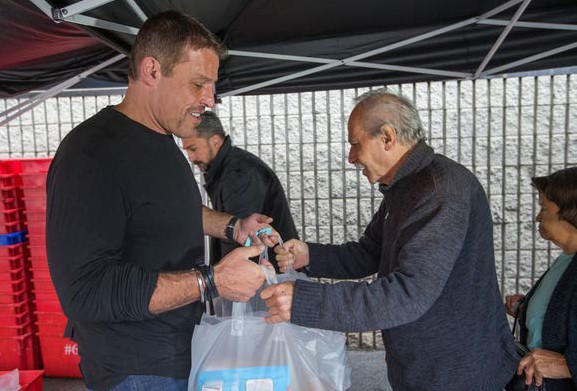
In partnership with Feeding America and other organizations, Tony Robbins has helped provide over 935 million meals to those in need.
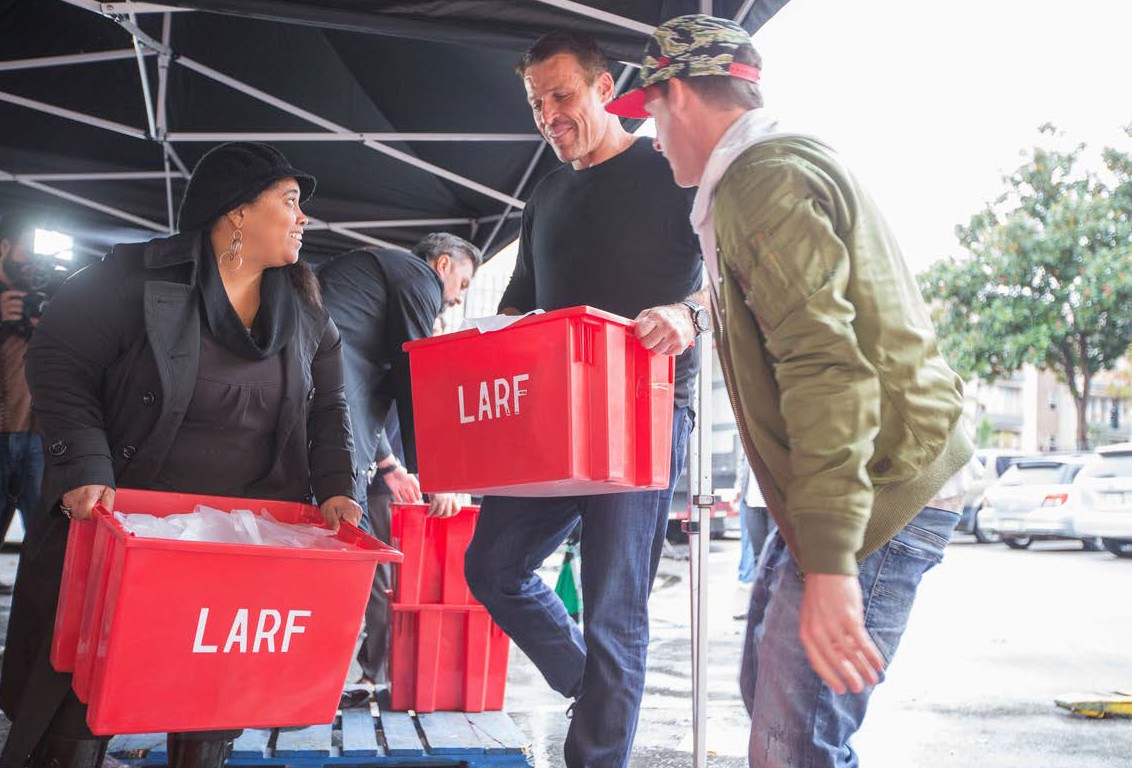
Now, he’s inviting others to be part of his next “insane” goal: providing 100 Billion Meals over the next decade
David, addressing hunger requires the coordination of complex legislative, private and public stakeholders across the globe. How can these actors better collaborate to address this issue? Currently, what are the major barriers to solving hunger?
Let’s be clear: the World Food Programme is not going to singlehandedly end hunger.
First, we need to end the wars, which are the biggest drivers of hunger today. Global leaders need to step up and use their influence to end conflicts around the world, and they need to do it now.
Second, we need the private sector’s help, not just to donate money, but to find real solutions to the challenges the world is facing today.
Lastly, in the short term, we need continued contributions from our donors to keep feeding the people teetering on the brink of starvation. This is crucial as it prevents starvation, destabilization and mass migration, creating an environment where peace can thrive, and more importantly, families have hope. As I told the Norwegian Nobel Committee:
“Food truly is the pathway to peace.”
David, are there any regions that show replicable models of success or effective strategies?
Every year I spend months and months in the field talking to mothers and fathers facing starvation. It is important to understand that people are not looking for a handout. Their religion, color, culture or nationality does not matter. People are people. They want to take care of themselves, their families and their children—they want hope and a better future. If they do not have security or a way to feed their family, they will do what any mother or father would do: migrate.
In fact, a recent WFP study shows that in Central America, the number of people thinking of migrating to the U.S. is five times higher than it was two years ago. And guess what? In those areas, food insecurity is exponentially higher than it was two years ago.
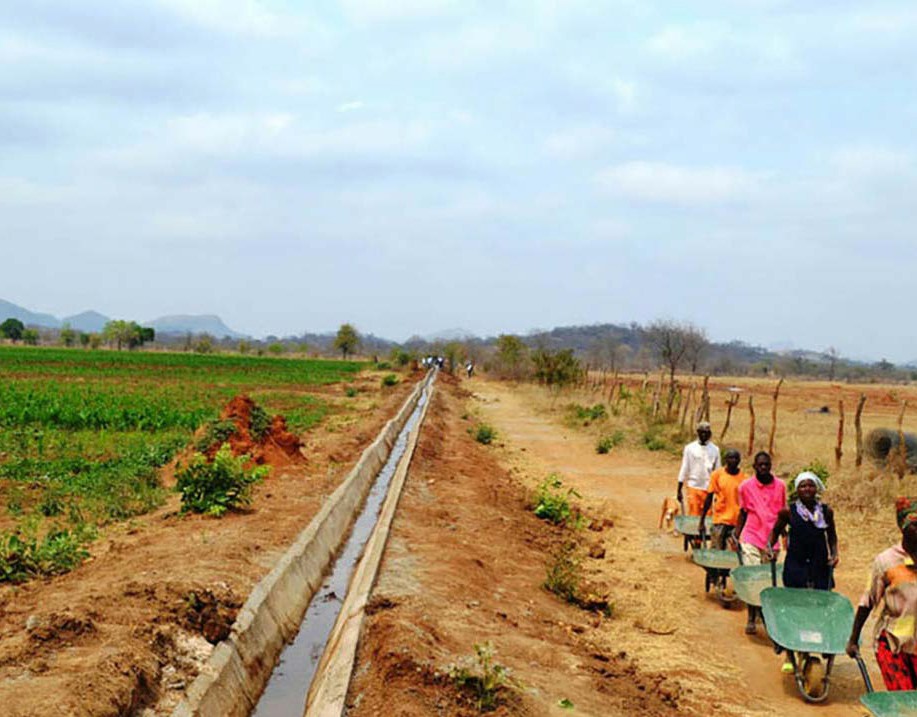
The United Nations World Food Programme works on building sustainable livelihoods and ecosystems in degraded environments
So that’s the bad news, but the good news is that the WFP has solutions. For example, we do these incredible projects with communities around the world affected by climate change. We come in and lay down water systems, rehabilitate land not just to produce food but to create jobs and income to pay for other things like medicine, schoolbooks and more. For example, in the last few years alone, we have constructed some 109,000 holding ponds, reservoirs and small dams; 59,000 kilometers of feeder roads and 79,000 kilometers of water canals, so that people can take care of themselves in places like Niger, Mali and Burkina Faso. I have seen this literally transform communities and lives and truly give hope.
And the even better news—it is cost effective, too! For example, I was recently in Guatemala visiting one of our projects where, for $10 per person per month, families are given the tools to be self-sufficient and no longer have to migrate. For example, The Washington Post published an article about how American taxpayers are spending
$4,000 per child per week at the U.S. border for shelter and food. Now compare this with $10 per person per month AND people can stay home—it’s a win-win for all.
Tony, raising the funds needed to support The 100 Billion Meals Challenge is a monumental task. How do you inspire others to support this cause? What is your call to action for our audience?
When I consider how we create change, I often think in terms of what leaders need to do, and I break it down into three simple chunks. The first one is that a leader has to see things as they are—no better or worse than the reality. Pretending things are better than they are is a disaster because there is no drive to change. But if we present the situation worse than it really is, then people become overwhelmed. It becomes too big for them to handle, and they also won’t take action because they feel like nothing will work. Unfortunately, that’s what we’ve done in the area of food.
The second chunk is to see it as better than it is.
“Without a vision, people perish.”
We need to define the problem to solve the terms. The challenge we are facing is that over 25,000 people die every day from hunger-related causes. If hunger were a country, it would be the third largest in the world. Because of its scale and complexity, we need to be innovative in our approach to solving hunger.
Our system of food is unsustainable right now. Worldwide, about 50% of all agricultural land is used to produce meat. Seventy percent of all the deforestation in the Amazon comes from cattle ranching. Livestock produces more greenhouse gases than cars and planes combined. Before it gets butchered, one cow uses about 15,000 liters of water over its lifetime.
With these factors in mind, I went to my friend, Dr. Peter Diamandis, and we put together an XPRIZE around food. We have a $15 million prize and 31 teams competing to find a better alternative protein source over the next year.
The third chunk is to frame the situation by asking: “What is the solution?” Along with the XPRIZE, The 100 Billion Meals Challenge is a solution. When I started out, providing 100 million meals seemed insane. I thought we couldn’t reach it, but we’ve done it in seven-and-a-half years, and we’re inviting you to join us on our next insane number!
We are looking for 100 people or organizations that would like to match what we’ve done. A hundred million meals a year for 10 years is a billion meals. If 100 people commit, we have 100 billion meals. That fills this gap.
We are not necessarily asking for your money, we are looking for ways for the food to get distributed and delivered. Some organizations are joining with their own distribution channels, which provide meals more efficiently. Some are making donations to the World Food Programme, where the money goes where it is needed the most.
David, what are your ultimate goals for the World Food Programme?
To end hunger and put it out of business.
David, do you have a call to action for our readers?
Love your neighbor as your equal. Just go out and help someone who needs help and see what happens.
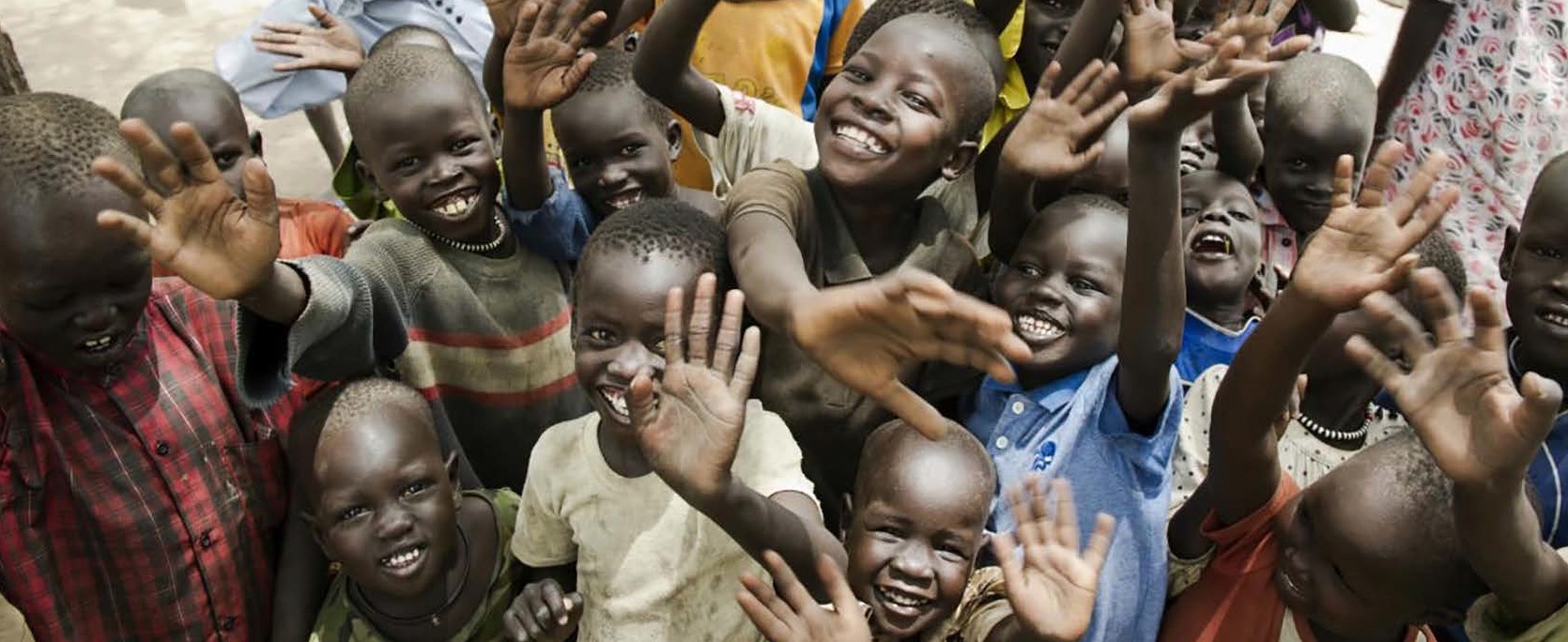
49 million people in over 45 countries are on the brink of famine. As this hunger crisis intensifies, so does the global risk of dwindling food supplies, geopolitical instability and increased death.
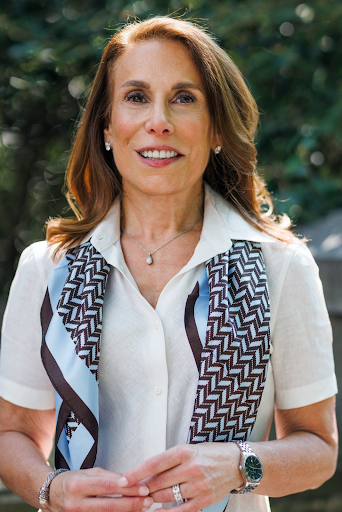
Our mission at the Cura Foundation is to improve human health and increase quality of life globally. To help mitigate
an ever-growing food insecurity crisis, Cura recently joined The 100 Billion Meals Challenge. In partnership with the Circle H Foundation and Circle H International, we will contribute 1 billion meals over the next 10 years through our worldwide distribution network and channels. Alongside Tony Robbins, creator of The 100 Billion Meals Challenge, we aim to create long-term sustainable solutions to end world hunger.

This holiday season, we invite you to help give back and assist people in need. Please spread the word about this crucial cause and donate what you can at bit.ly/1-Billion-Meals
Learn more and get involved today: 100billionmeals.org
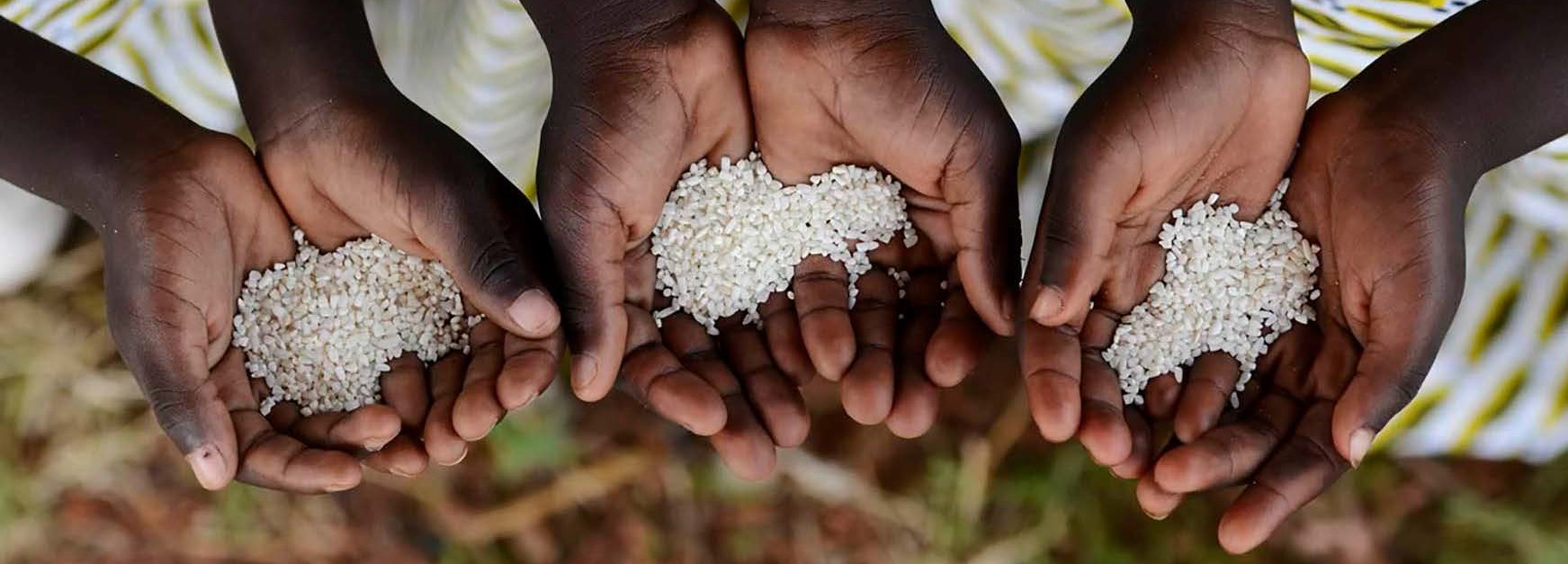
If you have any questions or feedback, please contact: curalink@thecurafoundation.com
Newsletter created by health and science reporter and consulting producer for the Cura Foundation, Ali Pattillo, and associate director at the Cura Foundation, Svetlana Izrailova.