
Climate change can often feel abstract or distant from our daily lives. But data shows that it not only wreaks havoc on our natural environment, it also jeopardizes our health. This month, physician and environmental scientist, Dr. Lisa Patel, shares the insidious health effects of climate change as well as the crucial tactics to address them. Together, Dr. Patel says, we can create a safer, cleaner and more connected world.
As we enter this holiday season, we would like to wish all of you a wonderful holiday and a healthy, joyous and peaceful 2024! We are grateful to each of our community members and thank you for your continued engagement and support.
Often, medical professionals can fall into a specific mode of thinking and focus primarily on alleviating acute physical or mental symptoms. Dr. Lisa Patel, however, takes a broader perspective: She views her patients within complex frameworks of social and environmental determinants of health. The factor that trumps others in shaping health and well-being? It may surprise you: climate change.
According to Dr. Patel and decades of mounting evidence, our changing planet and rising carbon emissions jeopardize the global population’s well-being. Dr. Lisa Patel is currently the executive director of the Medical Society Consortium on Climate and Health and maintains a clinical practice as a pediatric hospitalist caring for newborns, premature infants and children requiring hospitalization. She has witnessed the dire effects of climate change on hundreds of real patients and offers unparalleled insight into navigating the new era of climate medicine.
It started with Carl Sagan and his movie “Contact.” I saw it the summer before I started college. I read his books where he wrote about how special, small and fragile our Earth is. It made me want to protect our world. So I studied ecology and evolution in college. Beyond studying the issues, I wanted to improve them. That’s how I got involved in environmental science and working for the Environmental Protection Agency (EPA).
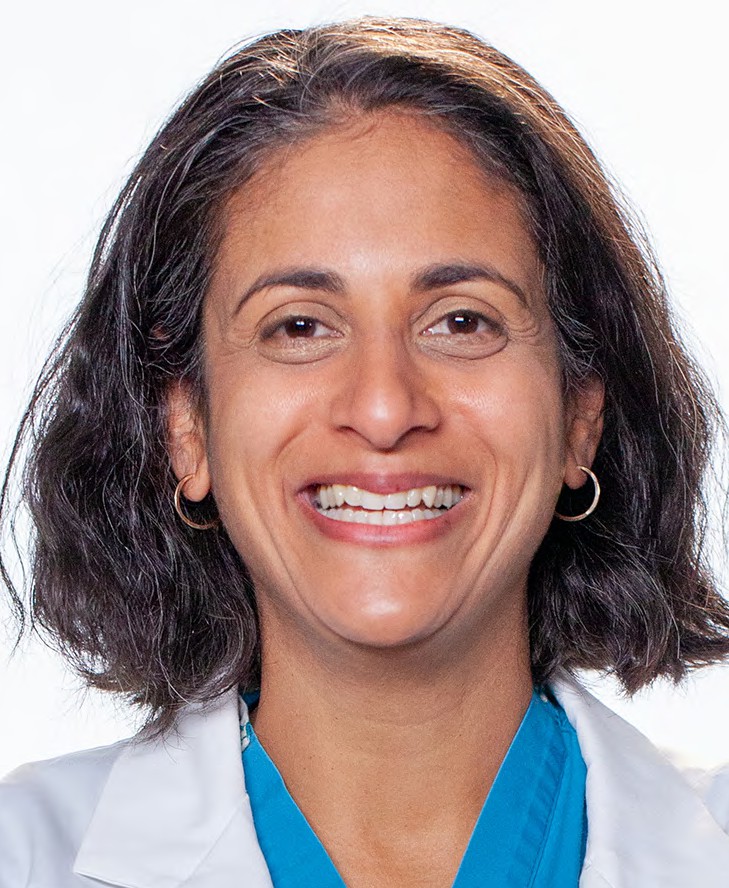
Lisa Patel, MD, MESc, Clinical Associate Professor of Pediatrics, Stanford Medicine Children’s Health and Executive Director, Medical Society Consortium on Climate and Health
While I was at the EPA, I worked on a project on childhood asthma in New York and Mumbai. Each megacity has a high rate of childhood asthma and was sharing lessons learned. I went to visit a hospital in Mumbai. There were so many children suffering from asthma attacks that healthcare providers had to rent a nearby gymnasium to house them. It was crazy. There was no reason why children should be struggling to breathe because we’ve polluted the air.
From there, it was a long path through medicine. The 2019 youth climate movement made it clear where I needed to focus my time, which was in transitioning toward renewables away from fossil fuels, which drive 8 million premature deaths per year. Fossil fuels cause the formation and exacerbation of asthma in children as well as other negative health effects.
A few years ago during the wildfire season in California, there were high winds. So one night during a 24-hour shift, the power was cut to prevent another wildfire from igniting.
This hadn’t happened before, and we were not prepared. We learned which parts of the hospital retained power and which didn’t. All of the mothers who had just given birth in our laboring rooms were in a blackout. Fortunately, the generators kicked on to ensure that the neonatal intensive care unit (NICU) had power.
Later, in 2020, the smoke across the area was so heavy that you could smell it in the NICU. No matter where we are, we can’t keep our children safe from toxic pollution.
Throughout my career, I’ve cared for infants, athletes and outdoor workers experiencing the health effects of heat. With babies, there’s a higher risk of dehydration. Either parents will give infants some water because they think they’re thirsty or over-bundle them in the heat. I’ve cared for infants who’ve been severely dehydrated as a result.
For athletes, especially in areas unfamiliar with extreme heat, just a slight temperature rise can tip them over and cause heat stress, heat illness and a condition called rhabdomyolysis, where muscle breaks down. I cared for a teenage outdoor worker who was hauling bricks in 108°F. He came in with kidney damage. We were able to reverse it quickly because he was 16. But we know that outdoor workers, in particular, have a risk of chronic kidney damage down the line from worsening heat.
Last year, we experienced a heat dome here in California, where it reached 116°F. I had two of the worst shifts of my career involving children with respiratory complaints, deliveries where the infant was in distress and new mothers experienced heat- related issues.
Wildfires have always been part of the landscape in parts of the western U.S. But the frequency and severity are on an upward trajectory. We used to have wildfires every few years. Now, it’s annual. We used to be able to contain them. Because of drought driven by climate change, places have become so dry that these fires burn uncontained for weeks. That throws off extremely toxic wildfire smoke, which we estimate is up to 10 times more toxic than the typical air pollution we breathe from burning fossil fuels.
Studies show that 50 to 70% of patients’ health outcomes are not determined by what happens within the clinic or hospital walls. They’re determined by social and structural determinants of health.
“Climate change will be the single greatest determinant of health for a child born today.”
It’s important for every single physician to not only do their clinical work but also engage in improving social and structural determinants of health, including climate change. Fighting climate change is part of our oath to do no harm and protect our patients.
Not only is climate change a threat in and of itself, but it’s also a health threat multiplier. It stands to make the existing threats people deal with far worse, like poverty, racism, interpersonal violence, food insecurity, housing insecurity and mental health issues. On hotter days, for example, we see more suicide attempts and interpersonal violence. Worsening heat makes people without secure housing more vulnerable.
Ten thousand years ago, our planet was very cold. Greenhouse gases allowed Earth to warm and our civilization evolved to survive in this temperature “sweet spot.” By burning fossil fuels, we’ve pumped so much carbon dioxide and other warming gases into the atmosphere that we have destabilized our planet.
“Climate change will leave no human life phase or organ unaffected.”
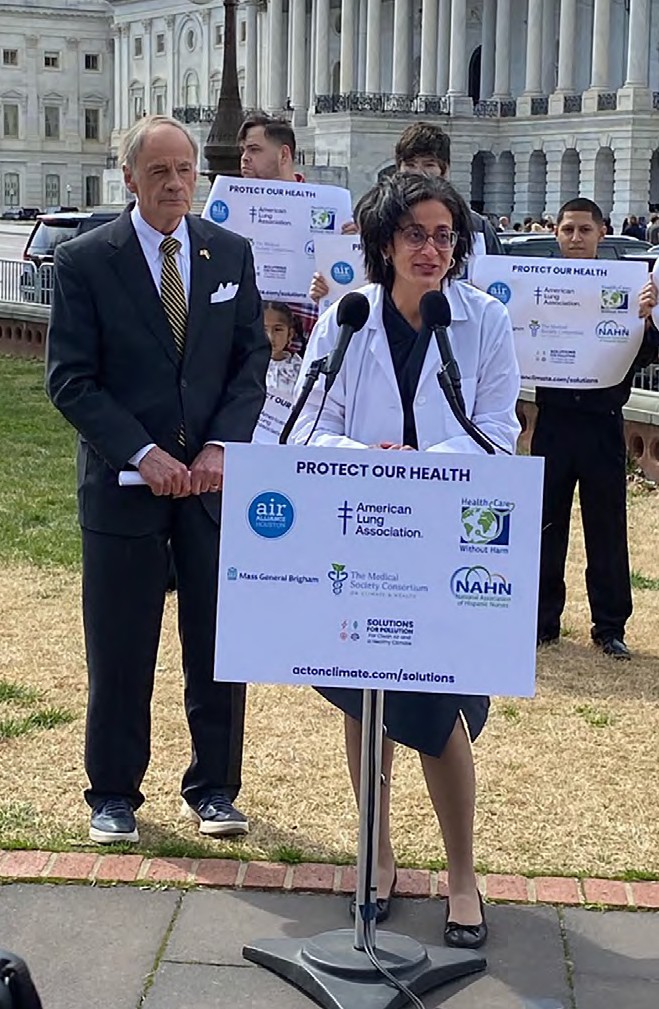
Dr. Patel at Protect Our Health event in Washington, D.C.
We are living out a natural experiment. We’ve never seen such a steep rise of carbon dioxide across human civilization. This leads to what Katharine Hayhoe calls “global weirding.” Places are dealing with brand-new threats. You see hurricanes in Southern California and blanketed wildfire smoke in New York. We also see threats worsening in places that are not adapted to them. For example, in Miami, sometimes the sewage overflows and spreads in the local waters due to sea level rise and flooding.
Allergy season and air pollution: Plants are thriving when they’re not supposed to, making allergy seasons longer and worse. Meanwhile, burning fossil fuels releases air pollution from fine particles called PM 2.5. Breathing these tiny particles sets off an inflammatory cascade, which leads to a higher risk of premature death, stroke, heart disease and lung diseases like asthma. It can also cause preterm birth and low-birth- weight infants, as well as Alzheimer’s.
Heat: Scientists have asked: “What are the temperature limits that humans can survive?” There are places on this planet, in South Asia and the Middle East, where we have reached those temperatures (~115°F) just this past year. That should alarm us. With extreme heat, we see heat illness, heat stroke and kidney damage. It can result in troubled breathing, pulmonary issues like chronic obstructive pulmonary disease and asthma exacerbations as well as preterm birth and low-birth-weight infants.
Water quality: Flooding events are overwhelming our municipal systems. They cannot clean all the water that goes out, which causes various enteric diseases to spread. In Jackson, Mississippi, for example, there has been chronic underinvestment in public infrastructure because of systemic racism. Add on big flood events and you have an entire city that doesn’t have access to potable drinking water. This is a moral injustice.
Vector-borne disease: For the first time, we’ve seen an endemic spread of malaria and Lyme disease in places like Texas and Florida. As places warm, mosquito habitats spread along with vector-borne diseases.
Mental health effects and degradation of living conditions: Mental health is a big one. We are attaching new words to understand what we’re living through right now. Solastalgia is the sense of being homesick while being at home which means sadness for this known beautiful world that we’re losing. Eco-anxiety is the sense that we can’t control these larger systemic forces that are destroying a livable world. We’re all feeling these things by watching the news and seeing the places that we love change.
Then consider those who live through climate disasters. I worked with a school psychologist in Sonoma who said that local kids have been displaced many times because of fires. Some will cry when they see smoke in the sky because they’re so traumatized from those events.
Scientists have studied children who went through Hurricane Katrina and found higher rates of depression and PTSD years after the event. Being displaced from your home and your community being torn apart is devastating. It’s a hard thing for families to recover from particularly if the surrounding ecosystem that they’re in isn’t resilient in handling these stressors.
Take Lake Charles, Louisiana, for example. It was hit with one hurricane, then a chemical plant exploded and a second hurricane came through. We can expect that places will be hit with one climate disaster after another. Places won’t even have a chance to recover.
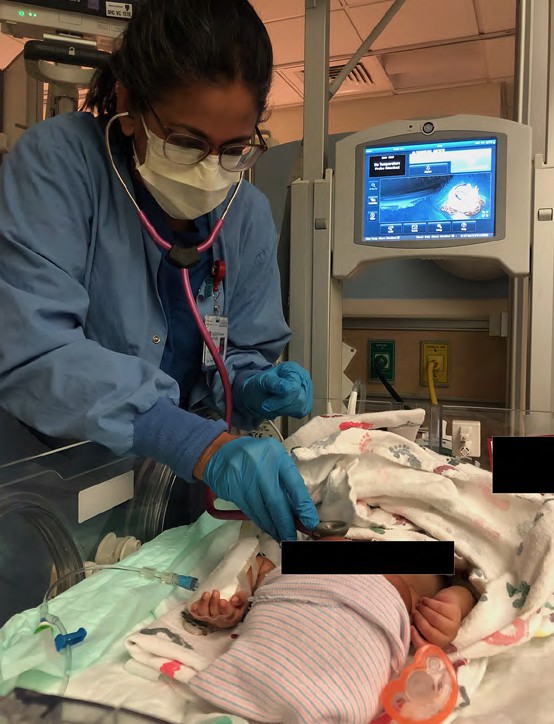
In addition to her advocacy work in climate medicine, Dr. Patel maintains a practice as a pediatric hospitalist caring for newborns, premature infants and children requiring hospitalization
When cities undergo these massive events, like floods or hurricanes, the trash and waste disposal system shuts down, potable drinking water becomes scarce and homes become infected with mold. We have to invest a lot of money to help people rebuild their homes. But often, there is systemic racism affecting who gets loans for their businesses or homes. When people get displaced, where will they move?
Food: At the Medical Society Consortium, we wrote a letter advocating for better food and farm policy that included 40 health organizations. The Farm Bill will come up for negotiation in the spring of 2024. Health organizations have typically not weighed in aside from commenting on the Supplemental Nutrition Assistance Program, which is very important.
Clinicians need to advocate to ensure nutritional access in the future, which depends on the rate of climate change. So we put forward recommendations for making more plant-forward foods (fruits, vegetables, legumes and seeds) cheaper and more accessible and moving away from our crop subsidy system that is polluting the environment and is bad for our health.
This includes soy, wheat and corn that are heavily subsidized and used to produce processed foods.
The agricultural sector is responsible for about 11% of our emissions. We won’t solve the climate crisis by reforming the agricultural sector alone. But we also won’t solve the climate crisis without reforming it.
Risks for Children: Overall, children are especially vulnerable to these effects. Infants cannot thermoregulate as well as older individuals. They are at a higher risk for mortality if they’re born during a heatwave, for example. Kids can be more sensitive to air pollution as well, as there is really rapid lung development in the first five years of life. Children also have less adaptive capacity.
It’s changing fast. Compared to five years ago, we see more health systems and health professionals concerned and taking action. It’s still the minority, but I’m really excited by the people involved and the changes occurring at the system level.
More medical schools are offering curricula on climate change like the Climate Resources for Health Education, thanks to the work of medical students who went lecture by lecture to integrate that information. There’s a planetary health report card that Medical Students for a Sustainable Future created. Institutions can compete with each other to see who is offering the most rigorous content. We’re seeing increasing numbers of medical schools sign up for it. Eventually, we’ll get to a place where all medical schools offer this curriculum.
In March 2023, the U.S. Department of Health and Human Services announced the Health Sector Climate Pledge to prioritize sustainability, which now has signatories from 1,150 hospitals representing more than 15% of hospitals in the U.S. It’s the beginning of a movement, where sustainability won’t be “extra credit” anymore. Every hospital should include this as part of its mission to do no harm.
Medical societies are passing internal policies and lobbying against climate change. The American Medical Association recently passed a policy statement and is spending more resources working on climate change. The American Academy of Pediatrics and the American College of Physicians have also been amazing leaders in the space. All of this gives me a lot of hope.
Natural disasters and extreme heat can drive a lot of people into healthcare systems. Hospital systems and cities tend to have emergency procedures for threats that they are familiar with. New York, for example, created emergency response protocols after the September 11 attacks in 2001. They’ve integrated climate change into those protocols, particularly around heat. In California, we have emergency preparedness and infrastructure around earthquakes. We now need to build climate change
threats into people’s thinking in terms of preparedness. Health systems need to prepare for blackouts and brownouts as it gets hotter and grids become overtaxed by air conditioning demand. Installing solar for backup will improve the resilience of hospitals and clinics.
In terms of patient interactions, we quickly need to build people’s understanding and capacity to address climate change. We can’t do that in one visit. Right now, climate change typically gets discussed only if a clinician is passionate about it. All clinicians should include periodic nuggets of information integrated into our screening tools and patient education materials.
In 2016, the new administration that came to power in the U.S. was proposing policies that threatened children’s health—taking away health insurance, reducing people’s access to the Supplemental Nutrition Assistance Program and not addressing gun violence in a serious way. As a pediatrician and a mother, I wanted to fight for the country that I wanted for my kids and all the kids that I treat. I started learning skills in advocacy through the American Academy of Pediatrics, then found a group of passionate doctors and medical students to work with on climate change in 2019. With that group, we were able to do a number of exciting things, like helping our healthcare center commit to sustainability goals and introducing board certification materials on climate change for pediatrics. Now as executive director, I meet many people who want to make a difference.
Having been through that emotional journey myself, I want to make it as easy as possible. I don’t want anyone to struggle to find their place. Because the solutions are simple. We have resources and infrastructure. We just need people to join us.
I’ve been studying environmental science for 25 years. Decades ago, climate change was presented as a problem for the polar bears—distant species in distant places. Now, more people understand that this is a personal issue jeopardizing our health.
When we understand climate change that way, much more will get done.
It’s been hard watching these heat events and wildfires happen and people suffering. But these events show people that they can’t escape the health threats of climate change. If there is a silver lining to these terrible events, it may build more public momentum for creating a healthier and more sustainable world.
There might be some tipping points that we have crossed, and we can’t undo that. But that doesn’t mean that we can’t prevent crossing others. Every 10th of a degree of warming that we prevent is a lesser catastrophe than we would have encountered.
We can feel a lot of gloom and doom, but we should focus on the world that we’re creating by switching to cleaner forms of technology. We’re creating a world that is more beautiful, clean, connected, sustainable, healthy and just. If we think too much about the tipping points and the catastrophes, we’ll talk ourselves out of our capacity to do something big and important.
Historically, the fossil fuel industry has funded campaigns to put responsibility on the individual and take attention away from the true systems responsible. Driving a gas-powered car or eating meat doesn’t disqualify you from talking about climate change.
We’ve set up systems that make it nearly impossible to live a carbon-free reality. People should take whatever individual actions they can, but what’s more important is to talk about the issue. Tell others in your life that you’re concerned about it and here’s what you’re doing about it.
The most powerful climate action is voting. Talk to your representatives about how important climate change is to you and to your health. It is especially powerful when health professionals discuss why climate change matters to our health. It makes climate change less of a political issue and puts it in the realm where it belongs, which is health.
Electrify your home: I would draw people’s attention to Rewiring America. There are resources built into the Inflation Reduction Act like tax credits to electrify your home, install heat pumps or switch to an induction cooktop, which save energy and reduce indoor air pollution.
Minimize your food waste: About 35% of the food we produce in this country gets wasted. It contributes to methane gas, which is about 20 times more potent a warming gas compared to carbon dioxide. So take containers to restaurants for leftovers and be thoughtful about what you buy.
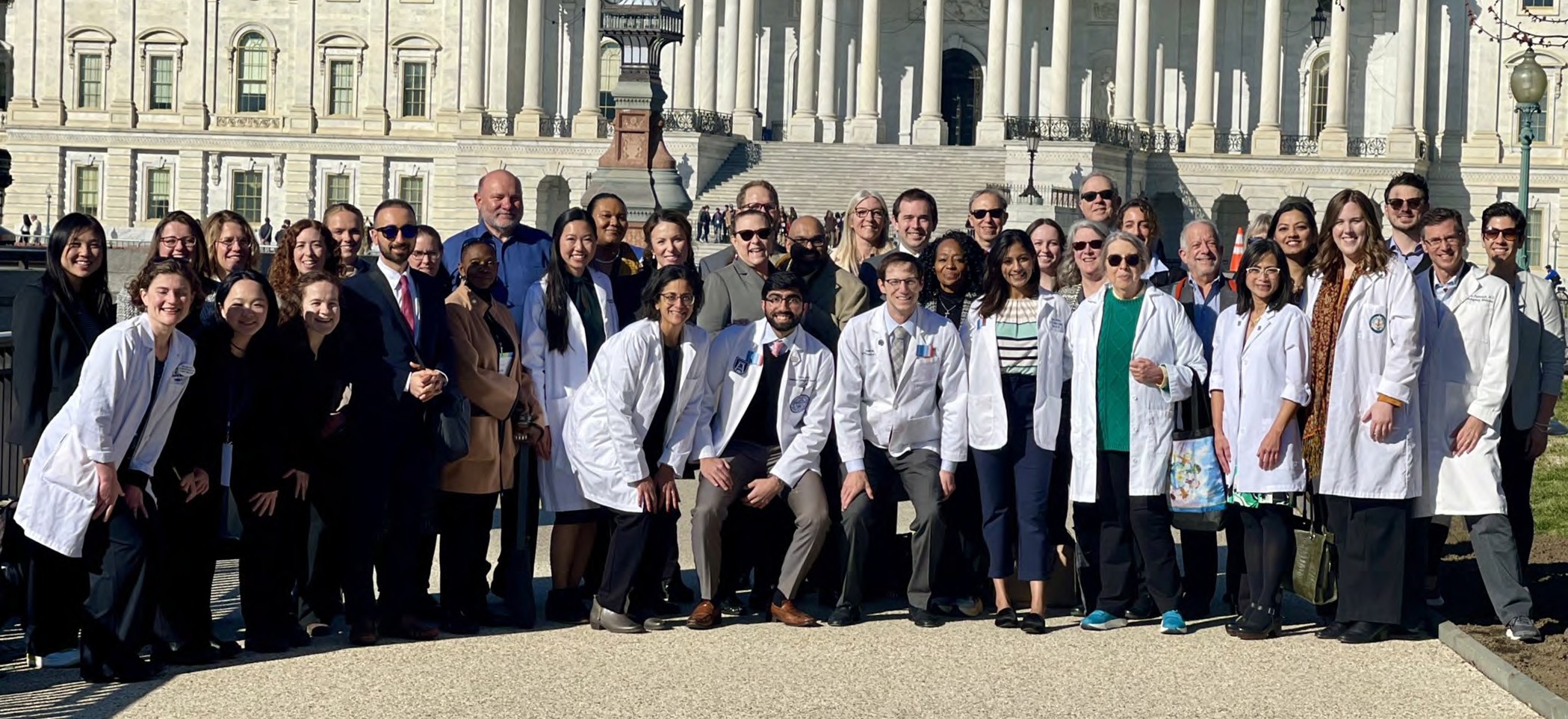
Dr. Lisa Patel with fellow climate and health advocates during the Medical Society Consortium on Climate and Health Annual Meeting in Washington, D.C. in March 2023. Dr. Patel is the executive director of the Consortium.
Transportation: The amount of gas we burn in five-minute car trips is remarkable. Switching to walking or riding bicycles is hugely helpful.
Ultimately, we need to listen and not lead. Marginalized communities should be setting the agenda while we provide the tools. For example, we worked with community organizations in Stockton, California, which has some of the worst air pollution in the country. The group was deciding how to spend millions of dollars from the state government to help redress historic injustices. They asked us for help finding related data, and we gave it to them. That is how these partnerships should work.
We should give environmental justice organizations the tools they need to advocate for themselves. In spaces where they feel like their voice isn’t being heard, we help carry their message to decision makers. Because of traditional power structures, there are times when our voice is more resonant. We always honor their requests and interests in moving the agenda forward.
We also have a climate health inequity fellowship for doctors of color at the Consortium, who can work alongside environmental justice organizations in their communities as a trusted voice.
A climate-resilient community is a place with affordable housing, where people across a variety of incomes live together. You can walk or take public transport to school, work or the grocery store. You bump into other people that you know along the way.
There are places where community members can gather in case it is a hot or smoky day—green spaces, libraries and community centers where people can stay safe if their homes aren’t. It’s a power-resilient place fueled by clean, renewable energy. There are community sources of solar energy that keep local clinics and hospitals powered. Houses also have backup energy sources so their food doesn’t go to waste if their power gets cut. There is access to clean drinking water, clean air to breathe and healthy food to eat. It’s a safer, cleaner and more connected world.
My hope is that climate change is not something addressed by a minority of people. It should be a charge that everyone feels, whether you devote 1 or 100% of your time to the cause. Everyone should understand how climate change is threatening our health, justice and survival and ultimately become part of the solution through their jobs or lives.
This interview has been edited for length and clarity.
If you have any questions or feedback, please contact: curalink@thecurafoundation.com
Newsletter created by health and science reporter and consulting producer for the Cura Foundation, Ali Pattillo, consulting editor, Catherine Tone and associate director at the Cura Foundation, Svetlana Izrailova.