
LifeSciences Forward
LifeSciences Forward
We would like to share a conversation with Matthew Johnson, PhD, the Susan Hill Ward Professor in Psychedelics and Consciousness at Johns Hopkins University and the recipient of the first NIH grant for psychedelic treatment research in the last 50 years.
Dr. Johnson is a leading researcher building on clinical research dating back to the 1950s suggesting that psychedelics may radically and immediately improve mood disorders and influence addiction. Read on to learn about the recent revolution in psychedelic therapy research.
Dr. Matthew Johnson and his Johns Hopkins team have conducted the largest trial to date on cancer-related distress and psilocybin, psychedelic studies on tobacco addiction and promising studies on psychedelics’ effect on major depression. The data, along with pivotal trials at other institutions such as UCLA, NYU Langone and Imperial College London, suggest psychedelics, when paired with psychotherapy, can be a safe, fast-acting and long-lasting way to treat crushing mental health disorders.
In emerging studies, many trial participants count psychedelic therapy among the most meaningful experiences of their lives, spurring positive effects on their mental well-being long after their sessions conclude. If the evidence continues in a positive direction, Dr. Johnson, who spent his earlier career as an addiction and substance abuse expert and intimately understands the potential risks of reality-altering drugs like psilocybin and LSD, believes psychedelics are poised to transform mainstream mental health treatment in the next 10 years, offering a potentially life-changing treatment for patients across the globe.
In Issue 4 of CuraLink, Dr. Matthew Johnson shares how psychedelics are moving from fringe recreational use to clinical psychiatric medicine, as well as the essential steps to ensure this path is as safe and efficacious as possible.
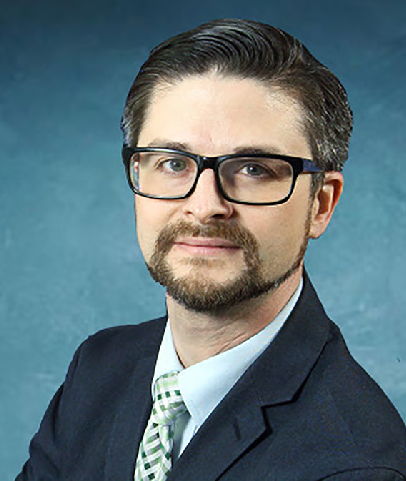
Matthew Johnson, PhD, the Susan Hill Ward Professor in Psychedelics and Consciousness at Johns Hopkins University
I was familiar with the research on psychedelics done in the 1960s and 70s. My research included the world of psychopharmacology and understanding how drugs affect behavior and the brain, so studying psychedelics was a natural extension.
I have approached my research on testing psychedelic drugs for mental health treatment by being mindful of their possible abuse potential as well as considering how any such risks may be reduced when developing a therapeutic.
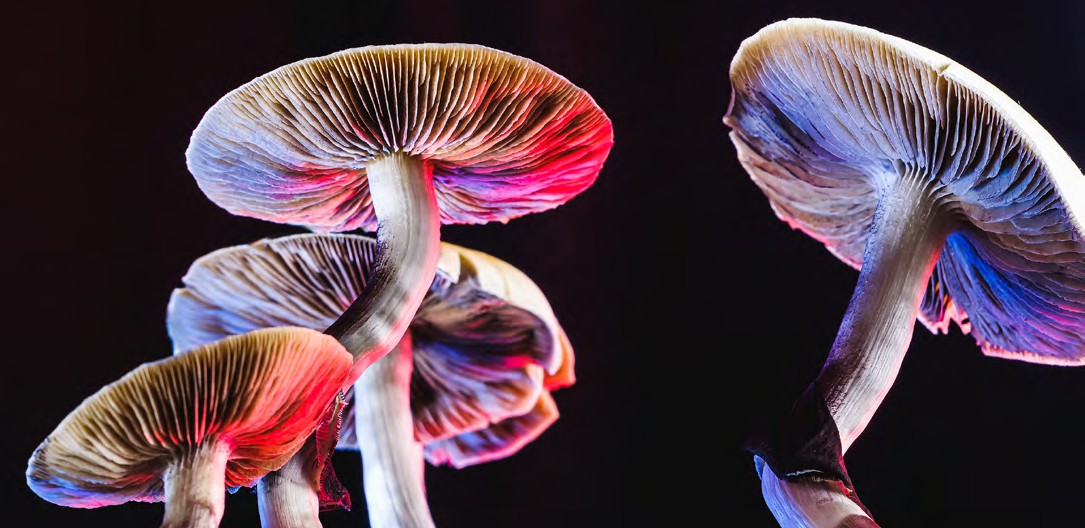
The mushroom pictured is psilocybe cubensis, a species of psychedelic mushroom whose main active elements are psilocybin and psilocin
One of my earliest efforts was to synthesize guidelines for giving a high dose of a psychedelic, drawing from the older literature going back to the 1950s, 60s and 70s and distilling recommendations for how that can be done safely. It is not that classic psychedelics are addictive themselves, but they can be abused, and these are two different things.
Simply put, a good portion of people that are using traditional medications for mental illnesses have not been adequately helped and need something that gives them more than limited efficacy.
Look at depression. There have been very few major advances in terms of the treatment of depression for over a half-century. The most common methods—SSRIs (selective serotonin reuptake inhibitors)—are safer versions of essentially the older tricyclics and monoamine oxidase (MOA) inhibitor drugs. All these drug classes augment the amount of serotonin between synapses between cells and augmenting extracellular serotonin— whether you go through Prozac or an older generation medication—has the same effect on serotonin. The SSRIs are safer—it is more difficult to fatally overdose on a bottle of SSRIs—which is really important for treating depression. You would rather not send patients home with a bottle of something that can become lethal.
Nonetheless, in terms of actually increasing efficacy, we haven’t seen much progress in over a half-century. The one small exception to that is ketamine, which, of course, is a psychedelic, but not a “classic” psychedelic. Ketamine has been a breakthrough in treating depression but the effects are usually short-lived—about a week. So far, our results with psilocybin, which have not yet been compared head to head with ketamine for depression, appear to last longer—up to six months and perhaps even longer.
We are in a mental health crisis. Suicide rates and deaths due to substances including tobacco, alcohol and opioids are very high. Sadly, we have lacked major advances in treating addiction and depression over many decades, and it’s time to look elsewhere.
The most advanced psychedelic research is on treating cancer-related distress. Three double-blind studies have been published, all showing promising evidence for reductions in depression and anxiety. Two of the studies, which utilized a two times higher dose than the first study done at UCLA, had very impressive effects. So we have the greatest confidence as a field to say that using psychedelics to help treat cancer-related distress is promising.
There are a few studies done on major depressive disorder. We did the first randomized trial, which was a waitlist control trial. Imperial College London published an open-label pilot study and a double-blinded comparison trial with the SSRI escitalopram.
We also have done some small pilot studies here at Johns Hopkins looking at using psilocybin to treat tobacco addiction. Others are looking at alcohol addiction. Both are really promising—they had high success rates, even though they have small sample sizes and are open-label non-randomized studies. Currently, I am doing a randomized 100-person study with psilocybin on smoking cessation, which looks very promising. This trial is randomizing half of the participants to receive psilocybin treatment and the other half to receive a standard course of nicotine patch, with both groups receiving the same talk therapy outside of the psilocybin sessions themselves to support quitting smoking.
There have also been three studies investigating 3,4-methylenedioxymethamphetamine (MDMA) for possible medical benefits in patients with post-traumatic stress disorder (PTSD) and cancer patients with anxiety. MDMA produces psychedelic effects but with differences compared to classic psychedelics like psilocybin and LSD. One of these is a phase three study and the Food and Drug Administration (FDA) needs to see more of these.
UCSD is conducting a double-blind placebo-controlled pilot to investigate the safety, mechanisms and effects of psilocybin-assisted therapy to treat chronic phantom limb pain in a supportive setting with close follow-up. Anecdotal evidence for the treatment of phantom limb pain seems promising, but more is yet to come.
There is also some evidence that psilocybin and LSD can help with headaches—both migraine and cluster. I’m interested in doing work with traumatic brain injury and athletes, for example, who have a history of repetitive head impact. Based on research in rodents, we see some structural neuroplasticity, so the idea is that you could neurologically heal some of the damage caused by head trauma.
I am also planning to start a study in the next few months using LSD to treat chronic pain. This is a continuation of work by Eric Kast who first used LSD in cancer patients to treat acute pain. Kast was surprised that LSD had durable pain relief results for many days after the drug wore off. So we are excited to pick up on that work and see how LSD can impact chronic pain.
Many participants in these trials count their psychedelic therapy sessions among the most meaningful experiences of their life, creating a drastic shift in psychological orientation. We’ve also seen dramatic improvements in depression and distress symptoms.
One reason is that there can be psychological resolutions surrounding the clinical situations and narratives surrounding these disorders. People may learn from these experiences and have greater flexibility in modulating their behavior after these sessions are completed.
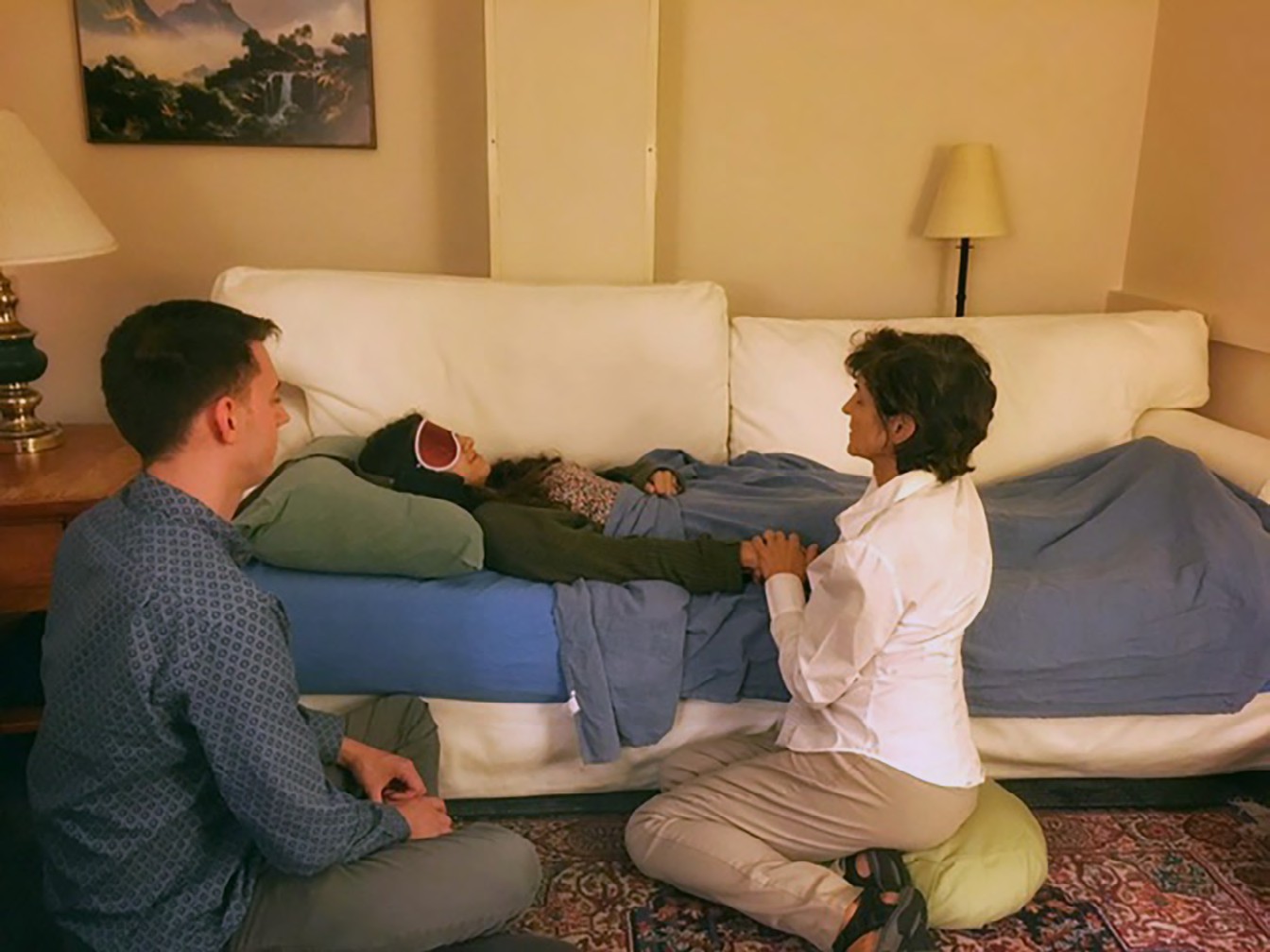
A mock psychedelic therapy session at Johns Hopkins Medicine
The results are pretty immediate. We also use discussion, processing and integration techniques to stabilize the individual and be sure they are safe because often, these sessions are not straightforward and can be difficult. Meanwhile, the mechanism of action around these treatments is not fully understood but may be a result of neuroplasticity and changes resulting from the psychedelic compounds, such as psilocybin.
Psychedelics have not taught us much about consciousness so far, but they potentially can. I believe that we can use psychedelics as tools to understand the so-called easy problems of consciousness that include concepts like access consciousness or self-identity—the idea that you are a certain person with a certain name, job or other self-identifying characteristics. The idea of access consciousness is best explained by this example—you were not thinking of the tooth fairy just now, but now you are because I mentioned it. You had the concept of the tooth fairy somewhere in your mind, and when I hit that node you became subjectively aware of it when prior to mentioning it the tooth fairy was not on your mind. How does that come in and out? This is a neuroscientific and psychological question.
Most of our biological work in psychedelics is more about answering the question: How do psychedelics work in the brain? We can sometimes fall into this category that if people and scientists have this impression that psychedelic experiences are so deep that they profoundly alter consciousness, we assume that anything we learn about how psychedelics work is telling us something fundamental about the nature of consciousness. But that is not necessarily the case at all. It depends on how you have specifically designed the studies.
I think within the next three or four years psilocybin and MDMA will both be approved as medicines. The indications that they will be approved for will start narrowly but should expand with time. Use may also be impacted by insurance coverage.
But I would predict that over the next several years, as people start to see family members and friends benefit, it will expand. It does not matter what your thoughts are on the drug war, the type of thing that gets the strongest anti-drug person to get on board is that they saw their mom dying of cancer and think: this might have helped her. These are the last people you would ever think of as “druggies,” but they hear stories about people’s lives being turned around. You see your neighbor’s daughter who had severe depression, for example, and her life is transformed by these therapies.
Nothing always works for everybody, but if things continue, the research seems to be suggesting psychedelics have the potential to help a larger proportion of people to a greater degree than the current medications available to them.
“Psychedelic therapy is going to be a branch of medicine and mental health care.”
Probably another 10 years after that approval, you are just going to see a lot more research funding from all sides, the National Institutes of Health, commercial and testing specifically for other indications, which is going to expand payer coverage.
Right now, it is looking really promising. Psychedelics are not going to be for everyone, but it is going to be a big piece of psychiatry in the future. I think psychedelic therapy is going to be a branch of medicine and mental health care.
But I’m sticking to the data. So, if the data starts telling a different story, then I’m going to go with that.
The main point, regarding regulations, is that there is a pathway for developing medicines with the FDA that is open for psychedelics. This is very different from what we have seen with cannabis where there have been conflicts between state and federal law.
So, if psychedelics or psilocybin are approved by the FDA and put on the market, they would be treated as a pharmaceutical medication with stringent prescribing rules and distribution regulations. This is no different than using fentanyl, propofol or nitrous oxide in anesthesia. There are drugs, for example, that physicians use in surgical procedures, but they are not sending patients home with them.
The belief is that the FDA rules would prevent people from self-administering medical psychedelics on their own, helping to ensure safety and wider use of the therapies for the many people who need them. Additionally, I believe there will be appropriate screening tools and various other safety mechanisms as well.
I am confident that the FDA is not going to approve something based on flimsy data that would essentially allow a company to sell these drugs for the experience, i.e., for people to get high. Good luck getting through the FDA with that. You have to show the safety and efficacy of treating a disorder to get through the FDA pathway for approval. I do believe FDA approval is conservative and, in turn, if drugs are approved, they are well vetted.
I am always concerned that people should act while keeping the safety and well-being of the patient in mind first, which can be jeopardized if they become part of a for-profit business. So it is important that these therapies are carefully distributed when they become commercialized, and we don’t end up in a scenario similar to that which we’ve faced with opioids.
There is a balancing act here. Because on the one hand, I would be lying if I did not say: Wow, I think psychedelics are really poised to constitute a major transformation and a major new branch of psychiatry and mental health treatment that stands to help a lot of people.
On the other hand, it is not going to work for everyone. And if you do not do it right, it can hurt someone, like most other areas of medicine. So we need to be sure the hype doesn’t get construed as the only option to improve. You do not want people to have unrealistic expectations and have a huge letdown. I do not think anyone should ever look at this or anything as their last resort. Nothing works for everyone, and the important thing is to not give up. Stay in treatment and always keep trying.
The research should also not be sending a signal to people that you should do this on your own. If it makes sense for a person and they want to check out the available studies or clinical trials, they can be accessed on clinicaltrials.gov.
It is very significant. This is the first grant from the U.S. government to study a classic psychedelic like LSD or psilocybin as a medication to help treat any disorder in over 50 years. Like other trials in therapeutic
development, you must look at the downside of a therapeutic, so these studies will help to elucidate the abuse potential of such a drug. It is important for the field as it hopefully will mean more research is to follow.
This also encourages young scientists interested in this area. I was told 18 years ago by some folks: “Good luck with the psychedelic stuff! What a shame you have such a great pedigree. Where are you going to go with this stuff? Where are you ever going to get NIH funding? How are you going to sustain your research program?”
It makes a big difference for students who have just recently earned their PhDs or their MDs that can go into this research and get public funding. In the U.S. at top medical schools like Hopkins you need to be self-funded to support your salary with the grants and contracts you bring in. So if you are going into an area where there is no government funding for that research, that is a career dead-end. So this may be the beginning of many careers in this area. It serves as a signal to young scientists that you can jump into this field, and there is a decent shot, if you play your cards right, to have a funded career to do research.
This interview has been edited for length and clarity.
In 2012, Dinah Bazer, an advanced stage cancer patient, participated in a landmark clinical trial at NYU Langone exploring how psychedelic therapy may influence cancer-related distress, anxiety and depression. Read on to hear an excerpt of Bazer’s story.
On a ski trip in the spring of 2010, Dinah Bazer felt a fear-inducing lump in her abdomen.
“I knew what it was,” Bazer tells Inverse. “I felt doomed, and I thought, ‘This is gonna kill me.’”
In 2012, two years after her first cancer treatment and tormented with anxiety over her cancer resurfacing, Bazer participated in a clinical trial at NYU Langone. She reclined on a couch in a room that looked more like a living room than a lab—a space complete with flowers, art and coffee table books. She put on a sleep mask and headphones and pressed play on a preselected playlist of classical music. Then she swallowed a dose of psilocybin.
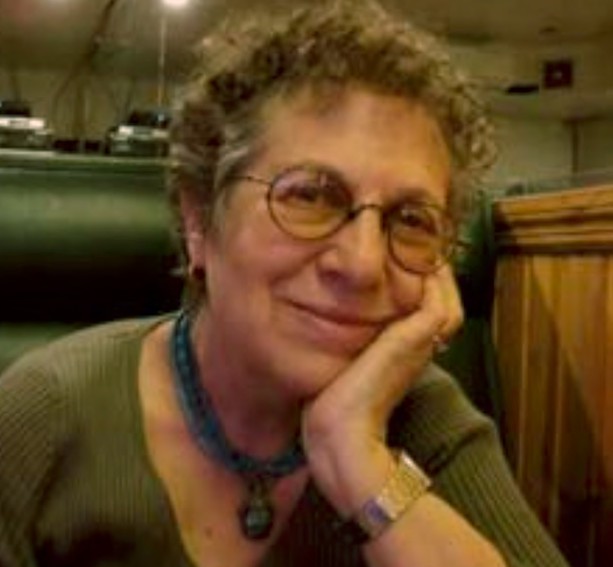
Dinah Bazer who participated in a landmark clinical trial at NYU Langone exploring how psychedelics affect cancer-related distress
“The psilocybin dose took effect very suddenly, and it was terrifying for me,” Bazer recalls. “I was really, really scared, and I was thrown into an incomprehensible space.”
Bazer reached out to her therapists who took her hand and encouraged her to “just go with it.” So she did.
“I saw my fear as a big black lump in my abdomen under my rib cage. It was not the cancer—that’s not where the cancer was to begin with. But it was the fear itself. And it infuriated me to see it. I was so angry, and I screamed, ‘Who do you think you are? Get out.’”
“Once I did that, it was gone,” Bazer says. “It just disappeared. And it has never come back.”
As of 2020, when Bazer discussed her experience with Inverse science reporter, Ali Pattillo, none of her cancer- related anxiety, depression or existential distress symptoms had reappeared. Based on her experience, Bazer says psychedelic therapy should be available to advanced stage cancer patients struggling with the psychological turmoil often stemming from their illness.
“This therapy has so much great potential for helping people, not just with end of life issues but with living issues— being able to live a truly functional life to the best of their abilities,” Bazer says. “Absolutely, it should be approved.”
Learn more and access the full Inverse article by health and science reporter and consulting producer for the Cura Foundation Ali Pattillo here.
If you have any questions or feedback, please contact: curalink@thecurafoundation.com
Newsletter created by health and science reporter and consulting producer for the Cura Foundation, Ali Pattillo and associate director at the Cura Foundation, Svetlana Izrailova.