
LifeSciences Forward
LifeSciences Forward
This month, we’re highlighting the transformational work of Dr. Angela Diaz, director of the Mount Sinai Adolescent Health Center (AHC). In New York City, Dr. Diaz runs one of the most accessible and patient- forward clinics in the United States. Under a single roof, the AHC offers integrated physical, mental and social services to optimize the health and well-being of around 12,000 adolescents every year—at no cost to patients. From legal counsel to dance classes to family therapy, the AHC supports nearly every aspect of youth’s lives and facilitates positive changes that go far beyond the clinic’s walls.
By redesigning services to be youth- and equity-centered, Dr. Diaz and her team ensure that patients emerge from the AHC healthier, happier and freer to pursue their goals. Dr. Diaz and the success of the AHC provide a revolutionary model for integrated health care that improves access for some of the most vulnerable, high-risk populations in the country.
Mental illness in young people has surged dramatically over the past two decades. Between 2007 and 2018, suicide rates among youth ages 10 to 24 in the U.S. increased by 57 percent, while mental health providers struggle to keep up with soaring demands.
Existing needs exacerbated by pandemic-induced isolation, a national racial reckoning and a widespread economic downturn have collided to create a “tsunami” of youth mental health needs, Dr. Angela Diaz tells the Cura Foundation.
From over forty years practicing adolescent medicine, Dr. Diaz knows first hand the psychological issues teenagers face. She also understands them on a personal level. In 12th grade, she, herself, dealt with severe depression and dropped out of high school. Fortunately, Dr. Diaz accessed therapy and career development programs at the same clinic she now directs, resources which she says provided a pivotal course- correction in her life’s trajectory.
Without the AHC, Dr. Diaz may not have become one of the country’s leading experts in adolescent medicine or the guiding force behind an organization helping thousands of young people every year. Drawing on these personal and professional experiences, Dr. Diaz’ insights are essential to combating the escalating mental health crisis.
In Issue 8 of CuraLink, Dr. Diaz shares her inspiring path to medicine, the optimal approach to treating youth and how she creates harmonious care integration in a notoriously fragmented health system.
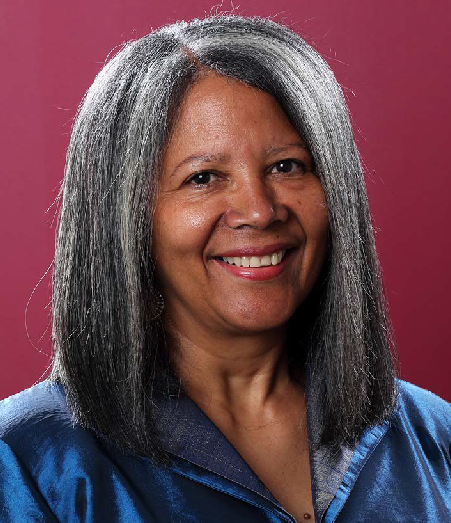
Angela Diaz, MD, MPH, PhD, Director of the Mount Sinai Adolescent Health Center, Dean of Global Health, Social Justice, and Human Rights and the Jean C. and James W. Crystal Professor in the Department of Pediatrics and Department of Environmental Medicine and Public Health at the lcahn School of Medicine at Mount Sinai
I was born in the Dominican Republic and immigrated to New York when I was 15. When I was four, I had a major accident and ended up in the hospital for surgery. Before then I really didn’t know what a doctor was. I lived in poverty as a child and teenager. I didn’t have health insurance or access to health care—I wasn’t even vaccinated at that time. So I had never seen health providers talking with patients and taking care of them.
In that pediatric ward where I was treated, there was an almost total devotion to the children. It was a helping profession— clinicians trying to bring comfort and make sure that you were eating and not in too much pain. I just loved the way that they interacted with me and the other patients. They were so kind. Ever since that moment, I wanted to be a doctor. I didn’t know what it meant. I didn’t know what it took. But I always knew that.
When I was in 11th grade, a guidance counselor was asking students: What do you want to be when you are older? I said: I want to be a doctor. At that time, Mount Sinai had a program for inner-city youth who wanted to pursue a career in health. She sent me and three other people from my school to this program.
Over the summer, I worked on a gynecologic oncology floor helping people with their meals or changing their bedpans. Being in that program brought me inside the hospital and cemented my desire to become a doctor.
But in 12th grade, I became very depressed and stopped going to school altogether. Program participants could get health care at the AHC, and, eventually, I realized I could go there for help. So I went, and they gave me therapy and encouraged me to go back to high school. With that support, I went back to high school, graduated and moved on.
So I wanted to be a doctor, but my family was low-income, and I had to work while attending high school and college. I went to City College and was a science major, but I really didn’t have support or people guiding me in the direction toward medicine. I was working in the same factory as my parents and going to college mostly at night.
One day, I walked by Columbia University Medical School in my neighborhood of Washington Heights. I went in and asked them: What do you need to be a doctor? And they said: You have to take biology, chemistry, physics and math. I said: I had taken all those things. Can I apply?
The admissions person gave me the form, which I completed on the spot. She was surprised, took the form and asked for an application fee of $15. I said I don’t have any money. I just came in to ask a question. She just took the form and waved me off.
Two months later, I got a letter asking me to come for an interview. I borrowed some clothes and high heels and went for my interview. One of my interviewers was a psychiatrist, and we had this amazing connection. A few months after that,
Columbia sent me an acceptance letter. That was a huge break for someone from my background.
When I went through the different rotations in medical school, I really loved the people in pediatrics—the residents, attendings, patients and parents. It felt very natural to me, and after medical school, I did my residency in pediatrics at The Mount Sinai Hospital in New York.
I was committed to join the National Health Service Corps after residency and work in an underserved area, as required by the Corps who funded my medical education. But the former director of the Mount Sinai Adolescent Health Center heard that I worked really well with teenagers and asked me to do a fellowship at the AHC with the permission of the National Health Service Corps.
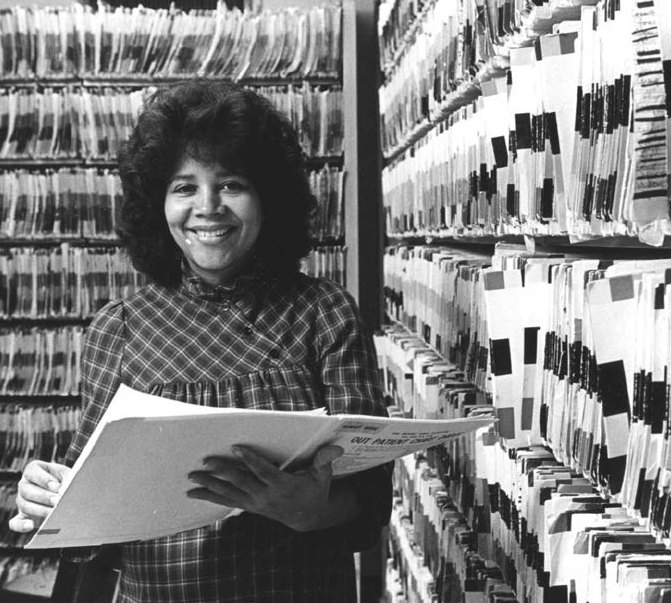
Dr. Angela Diaz at the Mount Sinai Adolescent Health Center in 1984
Once I trained in adolescent medicine and worked with the teenagers, I fell in love with it. My supervisor offered me a permanent job in the middle of my training, and I’ve been at the AHC ever since.
As people, teenagers are very authentic, courageous and creative. If they trust that you care about them, are trying to help and are asking them the right questions, they share their life with you. If you ask a teenager why they come to the AHC, they say because they feel welcomed, respected, connected, safe and not judged. When they have that, they can be themselves.
I often feel like I am an artist helping shape these wonderful young people. Many behaviors of adulthood are being formed during adolescence. You can really have a tremendous impact by guiding teenagers, teaching them and helping them create the best possible habits and behaviors that can sustain them throughout their lives.
“Not only are adolescents growing physically, but they are also forming their values, their morality, their behavior and their critical thinking during this period.”
They are discovering themselves and finding their place in society. I find it very enriching to help guide these amazing humans during this critical time.
We have an integrated model of medical, sexual and reproductive health; dental; optical; nutrition; health education; and behavioral and mental health. I often say: from head to toes, from dental to mental.
We also offer legal services, mind-body work like yoga and dance and healing through the arts. We help with academics including tutoring, SAT prep and college entrance applications, because health and education are intertwined. You cannot separate them. If you’re not healthy, it’s really hard to learn, even when you’re going to school.
Then we have a number of specialized programs including for kids who are gay, lesbian and transgender; those with trauma, including sex trafficking and patients who are HIV positive. We have the expertise to take care of all these groups’ health needs.
We provide the full range of family planning methods, from prevention to prenatal care and have a Young Parents Program. On the same day, we can provide health care for the entire family to make sure that the teenager and the baby have their needs met as well as offer family therapy for all generations in the family.
Our philosophy at the AHC is that we are a youth-friendly, youth-specific place. We ask teenagers: What are potential barriers that may prevent you from coming here? What are potential facilitators that are going to help you come? Then we
design services around those answers.
If teenagers have an issue, they want it to be addressed right away. They don’t want to hear about a two-week or two-month timeline, because by then, either their issue is gone, they went someplace else or they forgot. So we encourage patients to make appointments, but also every day they can just walk in.
During a patient visit, I take a youth’s history. I speak to them directly in simple language. I want to know them as people— what they are thinking, what they are feeling and what they are doing. What is really important to them? What is bothering them? Then based on what they share with me, I design an individualized intervention plan and include whatever discipline we have that may be helpful to that young person.
Privacy is a key factor for teenagers. They say that if they don’t have confidentiality, they may not come for services, because they are worried that their parents or a family member is going to find out about some behavior. If they don’t come in, they will likely continue engaging in that behavior without receiving proper care. That’s not what we want. We want them to discuss options freely so that they can have the best possible outcome.
Confidentiality also often means seeing patients without using their health insurance. Because sometimes insurance companies send the explanation of benefits to the person that owns the policy, not our patient, which violates confidentiality of the youth.
We want adolescents to have upgraded autonomy. So we love parental involvement, but always make sure to spend time alone with the youth to dig into sensitive issues that they may not feel comfortable sharing in front of anybody else, including their parents.
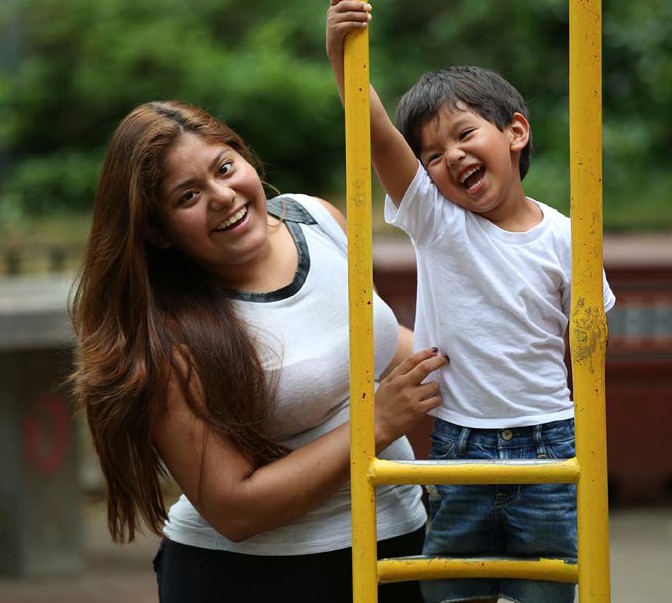
Leslie Gomez came to the AHC for pediatric care for her son, Joshua. Social worker Tricia Folman helped her deal with issues of domestic violence while giving her guidance on parenting. Watch Leslie’s full story here. (Patient story courtesy of Mount Sinai. The safety of the community is Mount Sinai’s highest priority; some images herein were taken prior to February 2020)
From the beginning, the Adolescent Health Center has been an integrated clinic. Physically, we see everything from the common cold to routine physicals to sexual assault forensic exams.
In terms of mental health, the most common issues are stress, anxiety, post traumatic stress disorder and depression. Most of our youth have trauma, especially sexual trauma. Many of our youth are gay, lesbian and transgender, and those kids often get bullied or teased in school. So you have all that interpersonal conflict, either among peers at school, in communities or inside the house.
Usually, health care is mono-disciplinary. When you have 15 disciplines working together, it can be challenging because you need to ensure that everyone is in harmony and feels appreciated about their contribution. The compilation of disciplines creates the beauty and the magic, and it is why our kids do so well. It’s not just because of one doctor or one therapist.
To keep the system operating optimally, I have one medical director for the entire system to integrate the various disciplines. This ensures that we can have one philosophy and one way of working together through equity and youth-friendly lenses.
People now commonly talk about equity, but we have put equity first since 1968. We always knew that some young people have been deprived of certain things like health care or education. So we make sure that we work with them in a way that they can propel them to achieve their maximum potential.
Also, because we provide health care at no cost to patients, we don’t exchange money with anyone, including when we see youth who are not necessarily low-income because we feel that all teenagers have the right to have their needs met.
So when you have to raise the money to fund this, that’s a major challenge. Even if you get grants, they don’t always come on time, so you need to make sure you don’t have cash flow issues. You have to be a little fundraising machine, because you have to raise funds every single year.
We track all of our patients’ social determinants—where they live, their school and their community resources. We know that many teenagers have undergone adverse childhood experiences, including sexual abuse, physical abuse and neglect, and we ask them about these experiences directly. We also know that these youth are more likely to be traumatized. So if you have this conversation, you can then target interventions that are trauma-specific, like trauma-focused cognitive behavioral therapy, dialectical behavior therapy, and Eye Movement Desensitization and Reprocessing (EMDR) to help them heal.
We work with patients wherever they are in their journey to get to the next stage of life. If they are homeless, the staff will work with different shelters to try to find them places to stay. If they’re not in school, we figure out why. It may be because they were raped in the last school and don’t want to return. So then we try to identify a different school for them.
We also do psychological and psycho-educational evaluations, so that psychologists, parents and our legal team can help kids get what they need if they learn differently or have a learning disability.
Because many of these patients are low-income, black and brown, often people are afraid of them in the streets. They do not get a lot of positive input. When patients come here, they feel seen. We love them, and we appreciate them for who they are.
For years, teenagers have had mental health needs. There has always been an inadequate capacity to meet them.
The trifecta of the pandemic, the financial crisis and the racial reckoning put youth over the edge. Especially for a population like ours that is low-income and black and brown. In addition, the schools were closed. Teens were home and isolated with their routines interrupted and without their usual social connections.
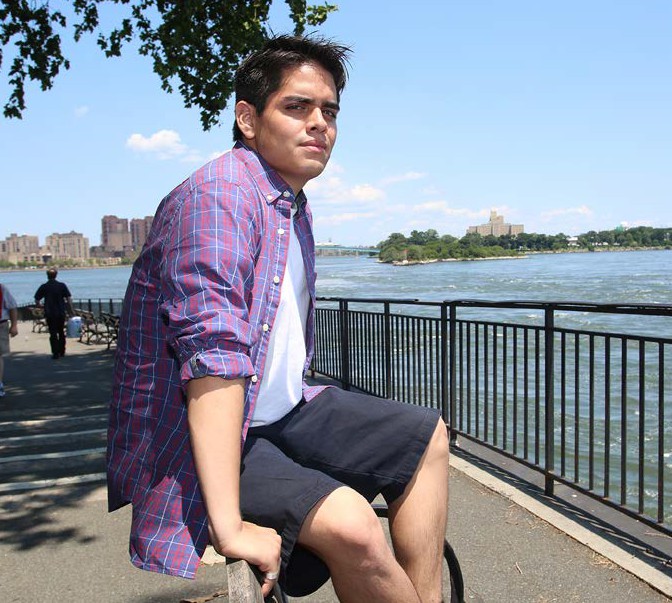
Fausto Gallegos was diagnosed with HIV on his 21st birthday. The AHC helped him stay healthy and find direction. Now, he’s getting his MBA
We did a monthly survey starting in May 2020, which shows that 33 percent of our youth lost a loved one. Sometimes they lost the only parent they had. Many did not have the chance to say goodbye or the ability to gain support or closure at rituals like a funeral.
What we’re finding in our survey is that there has been an increase in anxiety, depression, financial issues, food insecurity, abuse, trafficking and interpersonal violence since the pandemic, especially when people were isolated inside their houses.
All of these factors combine to put many young people into a state of crisis. There is a tsunami of youth mental health needs coming upon us that many people are really not aware of.
Also, there is a mismatch. As the needs expand, the capacity of mental health providers is decreasing. Many are entering the private sector, and there are not enough mental health providers to begin with, especially child and adolescent psychiatrists. We need more social workers, psychologists and psychiatrists in general.
The U.S. health care system was created by adults for adults. Then we try to fit teenagers into this system, and when it doesn’t work, we blame them. We call them “non-compliant and hard to reach.” Indeed, what is hard to reach are the services how they are designed. in marketing and looks forward to working for a company that develops HIV drugs. “I don’t want to be someone who happens to have HIV. I want to be an advocate,” says Fausto. Watch Fausto’s full story here. (Patient story courtesy of Mount Sinai)
Overall, the U.S. needs to create policy to develop youth-friendly and youth-specific services and providers that understand them developmentally—making changes like cutting down on waiting lists or conducting appointments outside school hours.
We need adolescent or young adult medical homes where people have access to health resources and health care. When I say health resources, I mean healthy foods, exercise and environments where people can be active.
We should see physical, sexual and mental health care as a right that everyone has access to. In the United States, we are extremely advanced technology-wise, and the quality of health care is often high for those who can get it. But not everybody can access it. Health care is not well-distributed even for the general population, let alone teenagers.
We have created a free flow of communication between patient appointments. We built an app called Health Squad. Our patients use it to ask questions at any hour, and a doctor will respond to them within a business day. We send them medication and appointment reminders through the app, so that they can be better health care consumers. We also use MyChart®—a patient portal containing their electronic medical records.
We want them to always have access to us. The clinic is open all day Monday through Saturday. As soon as the doors are closed, there is an on-call service managed by physicians. So the youth have access to us 24/7, 365 days a year, either physically because our doors are open or through the answering service where we respond promptly.
It’s almost a closed-loop system. When patients are sick, instead of going to the emergency room, they can come to the Adolescent Health Center as a walk-in. Or if they are admitted to another hospital or facility, we stay in touch and later bring them back to our system for care.
In the mid 1980s, during the AIDS epidemic, we also developed a peer education program. Initially we trained young people to educate other young people about HIV prevention, but we have broadened the scope. Now, we offer youth health education around various topics like sexuality and trauma.
We are an organization that is always learning and changing to meet the needs of our population, especially through patient experience surveys. We are never done.
We think there should be a Mount Sinai Adolescent Health Center in every borough, every city or every state, and there can be. In 2016, we actually wrote a blueprint for replication and now work with others in partnership to provide technical assistance.
The major challenge that people find is the financial model. They say: Dr. Diaz, you can raise the money being based in New York City, but wherever we are, we are not able to. Or doctors are not necessarily inclined to fundraise.
If the government can create a sustainable funding mechanism for integrated adolescent health, it will be much more cost- effective than our current system. Policy should also include incentives to train mental health providers and those specialized in adolescent health and primary care.
On average, we spend about $1,000 per youth per year for all services provided. Some kids need less and some need much more. But on average, this integrated model is extremely cost-effective and has a tremendous impact. The young people do well—many stay in school, go to college and graduate school. They do better than they would have, given their life circumstances.
This program can bring not just tremendous savings in human suffering, but promote well-being in youth, who are then better educated and contribute to society. So there is a win-win.
I talk about teenagers because that’s the population that we serve, and they probably need this the most. But in our service, we see low-income youth, those in foster care, those who are homeless, immigrants, or documented and undocumented refugees, as well as those with HIV or who have been trafficked. This model is really attractive and inclusive to patients from all backgrounds.
From prenatal to palliative care, this integrated model of being really patient-centered, regardless of the age or the stage of development, is the best approach. Ultimately, it saves money, too.
In terms of our program, my immediate vision right now is finding child, adolescent and adult psychiatrists to make sure that we double our capacity in mental health to meet the increased need. We are currently getting about 50 mental health calls per week that we cannot keep up with.
More broadly speaking, we also train pediatricians, internists, family physicians, psychologists, social workers and health educators to become adolescent medicine experts. I am very interested in conducting research, doing advocacy and helping shape policy. We work at the local, state and federal levels to help craft some of the policies that we want, not just for our youth, but for adolescents in general.
“On a daily basis, I see the lives of our young people transform.”
I also think about my own life. I was a high school dropout. I had no access to health care, I had a little bit of psychotherapy at the AHC in high school. But that was enough—this support helped me get back to high school and then go to college, become a doctor and contribute. AHC’s impact even extends to my own biological children, who are very successful, happy people. The right help at the right time can spur positive effects across a lifetime.
I find the energy of our young people very enriching. They really want to do the right thing. Just knowing that they matter to someone is meaningful. Helping them feel seen, through the love that we give them, keeps me going.
This interview has been edited for length and clarity.
If you have any questions or feedback, please contact: curalink@thecurafoundation.com
Newsletter created by health and science reporter and consulting producer for the Cura Foundation, Ali Pattillo, and associate director at the Cura Foundation, Svetlana Izrailova.