
METABOLIC HEALTH SERIES
The Silent Thief:
Understanding, Reversing, and Outlasting Insulin Resistance
September 2026 | Longevity & Wellness Series
It steals your energy before you notice it is gone. It quietly accelerates the aging of your arteries, your brain, and your cells — sometimes for decades before a doctor ever flags it on a lab report. Insulin resistance is, in the view of many leading metabolic scientists, the single most consequential and most overlooked driver of chronic disease in the modern world. Dr. Robert Lustig, Professor Emeritus of Pediatrics at the University of California, San Francisco, has long argued that insulin resistance sits at the center of many modern chronic diseases — not obesity, not even diabetes, but the upstream hormonal dysfunction that silently produces both. And yet, for the many people currently living with some degree of insulin resistance, there is genuinely good news: this condition is substantially improvable, and the tools to do so are accessible to almost everyone.
Understanding insulin resistance is not merely an academic exercise. It is, increasingly, one of the most important pieces of health literacy a person can possess — because how well your cells respond to insulin shapes not only your risk of type 2 diabetes, but also your susceptibility to heart disease, Alzheimer’s disease, cancer, fatty liver disease, hormonal imbalances, and accelerated biological aging. This article draws on peer-reviewed research, clinical evidence, and the work of leading authorities to explain what insulin resistance is, how it develops, and — most importantly — what you can do, starting today, to begin substantially improving it.
What Is Insulin Resistance?
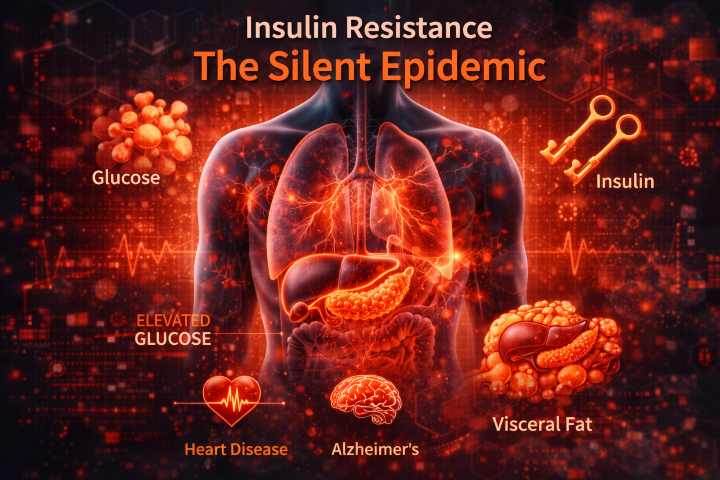
Insulin is a hormone produced by the beta cells of the pancreas. Its primary job is elegant in its simplicity: when you eat, your blood glucose rises, the pancreas releases insulin, and insulin acts like a key — unlocking the doors of your cells so that glucose can enter and be used for energy. In a healthy body, this system is exquisitely sensitive. Small amounts of insulin accomplish the task efficiently, blood glucose returns to baseline, and insulin levels fall back to low resting levels.
Insulin resistance is what happens when that key no longer fits easily in the lock. Defined clinically as an impaired biological response of target tissues — primarily the liver, skeletal muscle, and adipose tissue — to insulin stimulation (PubMed PMID: 29939616), it forces the pancreas to compensate by producing more and more insulin to achieve the same effect. For a time, the system holds: blood glucose remains roughly normal, but circulating insulin levels are chronically elevated. This state — called hyperinsulinemia — is where the real damage begins, long before blood sugar ever becomes noticeably abnormal. A 2023 review in Frontiers in Endocrinology, drawing on data from 86 studies and over 80,000 participants, confirmed that insulin resistance is now a global public health concern, closely linked to cardiovascular disease, hypertension, neurodegenerative decline, and shortened healthspan.
- Insulin resistance is the condition in which cells respond inadequately to insulin, forcing the pancreas to overproduce the hormone to maintain blood glucose control.
- Chronically elevated insulin — hyperinsulinemia — is the true metabolic danger, driving inflammation, fat storage, and accelerated aging well before blood sugar becomes visibly abnormal.
- The primary tissues driving insulin resistance are the liver, skeletal muscle, and visceral adipose tissue; dysfunction in all three creates a compounding metabolic burden.

How Insulin Resistance Develops
Insulin resistance does not arrive overnight. It is an accumulation — the biological consequence of years of metabolic stress. Understanding its origins is essential, because the same mechanisms that create it reveal the levers we can pull to address it. Dr. Lustig’s research has identified excess dietary fructose as a significant contributor to this story, though researchers broadly agree that total energy excess and refined carbohydrates are also central drivers. Unlike glucose, which can be metabolized by every cell in the body, fructose is processed almost entirely by the liver. When the liver is overwhelmed with fructose — delivered in the form of sugary beverages, ultra-processed snacks, and the sugars found in a large proportion of packaged food products — it converts the excess into fat, triggering a cascade of metabolic disruption that begins with fatty liver and ends with insulin resistance in hepatic tissue.
Excess refined carbohydrates and sugar cause relentless insulin spikes. Over time, cells begin to downregulate their insulin receptors — a protective adaptation that nonetheless creates the very dysfunction it was meant to prevent. Simultaneously, the accumulation of visceral fat (the fat surrounding the organs) releases inflammatory cytokines that further impair insulin signaling. Chronic psychological stress amplifies this cycle: elevated cortisol promotes visceral fat accumulation, raises hepatic glucose output, and drives insulin levels higher. Poor sleep — now documented in multiple studies as a direct cause of insulin resistance — compounds the damage by disrupting the hormonal rhythms that regulate glucose metabolism. Physical inactivity removes one of the body’s most powerful mechanisms for glucose disposal: muscular contraction, which allows muscles to absorb glucose independently of insulin through GLUT4 transporter activation.
The result, as a 2023 study in Diagnostics on aging and insulin resistance confirmed, is a deterioration that worsens with age — but that is by no means inevitable. Many of the drivers of insulin resistance are environmental and behavioral, not genetic. That is what makes this condition, despite its prevalence, so responsive to lifestyle intervention.
- Excess dietary fructose and refined carbohydrates are significant nutritional drivers of insulin resistance, overwhelming the liver and triggering fat accumulation and inflammatory signaling — alongside broader total energy excess.
- Visceral fat, chronic psychological stress, sleep disruption, and physical inactivity each independently worsen insulin sensitivity — and many people encounter all four simultaneously in modern life.
- Insulin resistance worsens progressively with age, but research confirms it is largely behavioral and environmental in origin — meaning it responds meaningfully to lifestyle intervention.
Insulin Resistance, Aging, and Longevity: The Research Connection
The relationship between insulin signaling and longevity is one of the most thoroughly studied in all of biology. Animal studies from nematodes and fruit flies to mice have consistently shown that reduced insulin/IGF-1 signaling extends lifespan in multiple model organisms. A landmark study published in Cell Reports (2017) demonstrated that genetically reducing insulin levels in aged mice — without altering IGF-1 — improved insulin sensitivity, lowered fasting glucose, and extended healthspan. The researchers concluded that moderating insulin, rather than simply treating its downstream effects, may be a meaningful strategy for healthy longevity.
In humans, the picture is equally compelling. A 2023 review published in Frontiers in Aging (PMC10579801) summarized the evidence clearly: hyperinsulinemia and concomitant insulin resistance are associated with an elevated risk of virtually every age-related disease, effectively shortening healthspan. The mechanisms are multiple and interlocking. Chronically elevated insulin activates the MAPK/ERK proliferation pathway, increasing cardiovascular disease risk by stiffening arterial walls. It promotes excess cellular division, raising cancer risk. It impairs the blood-brain barrier and drives neuroinflammation, contributing to cognitive decline and Alzheimer’s disease — a connection sometimes informally described by researchers as “type 3 diabetes,” reflecting the role of impaired insulin signaling in the brain, though this is not an accepted clinical classification. Insulin resistance also accelerates cellular senescence by driving oxidative stress, telomere erosion, and mitochondrial dysfunction.
Dr. Peter Attia, physician and author of the bestselling longevity guide Outlive, has described insulin resistance as the metabolic foundation underlying the four major chronic diseases that kill most people: cardiovascular disease, cancer, neurodegenerative disease, and type 2 diabetes. His clinical approach treats improving insulin sensitivity not as a secondary health goal, but as the primary longevity intervention — the metabolic foundation upon which everything else is built.
- Reduced insulin/IGF-1 signaling extends lifespan in multiple model organisms including C. elegans, Drosophila, and mice; in humans, chronic hyperinsulinemia is independently linked to cardiovascular disease, cognitive decline, cancer, and accelerated biological aging.
- The brain is particularly vulnerable to insulin resistance — impaired cerebral insulin signaling is associated with neuroinflammation, cognitive decline, and elevated Alzheimer’s risk, independent of blood glucose levels.
- Improving insulin sensitivity reduces systemic inflammation, supports healthy cellular senescence dynamics, and protects mitochondrial function — three of the most powerful biological mechanisms underlying healthy aging.
Substantially Improving Insulin Resistance: The Evidence-Based Roadmap
The most important thing to understand about insulin resistance is this: for the vast majority of people, insulin sensitivity can be substantially improved. The Oslo Diet and Exercise Study, one of the earliest randomized trials on the subject, demonstrated that lifestyle-induced changes could meaningfully improve the insulin resistance syndrome. Decades of subsequent research have refined and deepened this picture. The path to improvement is not mysterious, nor does it require extreme measures. It requires consistency, an understanding of the biological levers at your disposal, and a willingness to take the long view.
Diet: The Foundational Intervention
Diet is where insulin resistance is most powerfully addressed — and where it is most commonly worsened. The guiding principle, as both Dr. Lustig and Dr. Attia emphasize, is deceptively simple: keep insulin low. The foods that drive insulin highest and most chronically are refined carbohydrates, added sugars, and ultra-processed foods broadly. Removing or dramatically reducing these is consistently the most effective dietary intervention, regardless of whether a person follows a ketogenic, Mediterranean, low-carb, or plant-forward approach. What unites all successful dietary strategies is not their macronutrient ratios but their elimination of ultra-processed, high-glycemic foods — and for Dr. Lustig, excess fructose in particular warrants attention given its direct hepatic processing burden. Fiber is equally critical: dietary fiber slows glucose absorption, feeds beneficial gut bacteria, and blunts the insulin response to carbohydrate-containing meals.
- Eliminate added sugars, sweetened beverages, fruit juices, and ultra-processed foods — these are among the primary dietary drivers of hyperinsulinemia and the first foods to address when seeking to improve insulin sensitivity.
- Prioritize fiber-rich whole foods: legumes, non-starchy vegetables, whole grains, berries, and nuts all slow glucose absorption, reduce postprandial insulin spikes, and support the gut microbiome’s role in metabolic regulation.
- Calibrate carbohydrate intake to your personal metabolic tolerance — those with significant insulin resistance generally respond well to meaningful carbohydrate restriction, while increasing physical activity expands how much carbohydrate the body can efficiently process.
Intermittent Fasting and Caloric Timing
Giving the body regular, extended periods without food is one of the most direct ways to lower baseline insulin levels and improve insulin sensitivity. When insulin is absent, the liver and muscle cells have the opportunity to deplete stored glycogen, downregulate fat storage pathways, and restore receptor sensitivity. Time-restricted eating — consuming all meals within an 8 to 10-hour daily window — has been shown in multiple human studies to reduce fasting insulin, improve blood glucose control, lower blood pressure, and reduce inflammatory markers. Caloric restriction, when it includes carbohydrate restriction, has been shown by research groups including those at Baylor College of Medicine to upregulate DNA repair proteins and activate longevity pathways including AMPK and sirtuins — the same pathways that improve insulin signaling at a molecular level.
- Practice time-restricted eating (an 8–10 hour daily eating window) as a sustainable, evidence-backed method of lowering chronic insulin levels and improving cellular insulin sensitivity.
- Avoid late-night eating — consuming food in alignment with circadian rhythms meaningfully improves insulin response, as glucose tolerance is highest in the morning and declines toward evening.
- For those with significant insulin resistance, periodic longer fasting periods (under medical supervision) or a fasting-mimicking diet protocol can accelerate recovery of insulin sensitivity by depleting hepatic fat stores.
Exercise: A Rapid Tool for Improving Insulin Sensitivity
If diet is the foundation, exercise is the accelerant. Physical activity is among the most immediate tools available for improving insulin sensitivity. When muscles contract during exercise, they activate GLUT4 glucose transporters that allow glucose to enter muscle cells independently of insulin — a physiologically meaningful effect that can be observed even after a single session, though the most durable benefits accumulate with consistency over time. Regular exercise increases lean muscle mass — the body’s largest glucose disposal site — and restores the mitochondrial function that is both a cause and consequence of insulin resistance. Peter Attia considers the combination of exercise with dietary carbohydrate management to be the cornerstone of insulin resistance improvement in his clinical practice.
- Walk after meals — even a 10-minute post-meal walk meaningfully blunts the blood glucose and insulin response to food, making it one of the simplest and most accessible daily habits for insulin management.
- Build and maintain muscle through resistance training at least 2–3 times per week: skeletal muscle is the body’s primary glucose disposal organ, and increasing muscle mass directly and durably improves insulin sensitivity.
- Incorporate both moderate aerobic exercise and high-intensity interval training (HIIT) — aerobic exercise depletes glycogen stores while HIIT powerfully stimulates mitochondrial biogenesis and GLUT4 expression, with consistent practice producing the most meaningful metabolic gains.
Sleep, Stress, and Lifestyle Foundations
No dietary or exercise intervention will fully improve insulin resistance in the presence of chronically disrupted sleep or unmanaged psychological stress. Both are powerful, independent drivers of insulin resistance through their effects on cortisol, inflammatory cytokine production, and hypothalamic-pituitary-adrenal axis dysregulation. A single night of poor sleep has been shown in controlled studies to produce measurable insulin resistance in healthy subjects. Conversely, consistently achieving 7 to 9 hours of quality sleep — particularly sleep that is well-aligned with circadian rhythms — is one of the highest-leverage metabolic interventions available. Stress management, whether through meditation, breathwork, time in nature, or meaningful social connection, reduces the cortisol-visceral fat-insulin resistance cycle that silently compounds metabolic dysfunction year after year.
- Prioritize 7–9 hours of quality, circadian-aligned sleep as a non-negotiable metabolic intervention — sleep deprivation is a direct, measurable cause of insulin resistance that dietary optimization alone cannot fully overcome.
- Actively manage chronic psychological stress: sustained cortisol elevation drives visceral fat accumulation, raises hepatic glucose output, and directly worsens insulin signaling — mindfulness, exercise, and social connection are all evidence-supported strategies.
- Limit alcohol consumption and eliminate smoking — both increase hepatic inflammation and oxidative stress, directly impairing insulin signaling and accelerating the metabolic dysfunction that drives premature aging.
The Reward: What Improved Insulin Sensitivity Looks and Feels Like
Improving insulin sensitivity is not merely about reducing disease risk on a future lab report. It is about recovering a quality of vitality that many people have forgotten — or never knew they were missing. As insulin levels normalize, energy becomes more stable throughout the day, no longer subject to the peaks and crashes driven by glucose-insulin dysregulation. Cognitive clarity improves, inflammatory markers fall, and skin health often changes visibly as hormonal balance is restored. Body composition shifts: fat storage signals diminish, and the body becomes more willing to mobilize stored energy. Sleep deepens. Mood stabilizes. The body begins to function the way it was designed to.
Perhaps most profoundly, improving insulin sensitivity means restoring the body’s relationship with time. Because insulin resistance is so intimately linked to the biological mechanisms of aging — cellular senescence, mitochondrial dysfunction, telomere erosion, chronic inflammation — addressing it is not only an investment in avoiding disease. It is an investment in the quality and character of every year you live. The science of longevity increasingly points to metabolic health as its most accessible and most impactful frontier. And insulin sensitivity sits at the very center of that frontier. The good news has never been clearer: you have the power to change this — and the time to start is now.
Key Research Citations
Wilcox G. Insulin and Insulin Resistance. Clin Biochem Rev. 2005;26(2):19–39. [PubMed PMID: 29939616]
Frontiers in Endocrinology: Global prevalence of insulin resistance — systematic review and meta-analysis, 86 studies (2001–2024). Front Endocrinol. 2025.
Insulin and aging — a disappointing relationship. Front Aging. 2023. [PMC accession: PMC10579801]
Aging Affects Insulin Resistance, Insulin Secretion, and Glucose Effectiveness. Diagnostics. 2023;13(13):2158. [PMC10341091]
Reduced Circulating Insulin Enhances Insulin Sensitivity in Old Mice and Extends Lifespan. Cell Reports. 2017;20(2):451–463.
Advances in Insulin Resistance — Molecular Mechanisms, Therapeutic Targets, and Future Directions. Int J Mol Sci. 2025;26(6):2574.
Lopez-Otin C, et al. Hallmarks of aging: an expanding universe. Cell. 2023;186(2):243–278. [PubMed]
Lustig RH. Fructose: metabolic, hedonic, and societal parallels with ethanol. J Am Diet Assoc. 2010;110(9):1307–21. [PubMed]
Lifestyle changes may reverse development of the insulin resistance syndrome: The Oslo Diet and Exercise Study. [PubMed PMID: 9028689]
Attia P. Outlive: The Science and Art of Longevity. Harmony Books, 2023.