

LONGEVITY SCIENCE SERIES
Written in Time:
How DNA Methylation Controls Your Biological Age
and How You Can Influence It
September 2026 | Longevity & Wellness Series
Imagine that your DNA is not a fixed destiny, but a richly annotated manuscript — one that has been marked up, highlighted, and edited throughout your entire life by your choices, your environment, your stress, your sleep, and your diet. The text itself never changes, but the annotations determine which genes are read loudly, which are whispered, and which are silenced altogether. This is, at its heart, what methylation is: a system of molecular annotations written directly onto your genome that regulates how your biology expresses itself — and, crucially, how quickly it ages.
DNA methylation has emerged as one of the most consequential and most measurable processes in modern longevity science. It sits at the intersection of genetics and lived experience, translating the choices of daily life into molecular instructions that govern cellular health, immune function, cancer risk, neurological resilience, and the pace of biological aging itself. And in the last decade, thanks to pioneering work by researchers at UCLA, Harvard, and institutions around the world, we have gained something remarkable: the ability to read this annotation system and use it to measure — and potentially influence — how old your cells actually are.
What Is DNA Methylation?
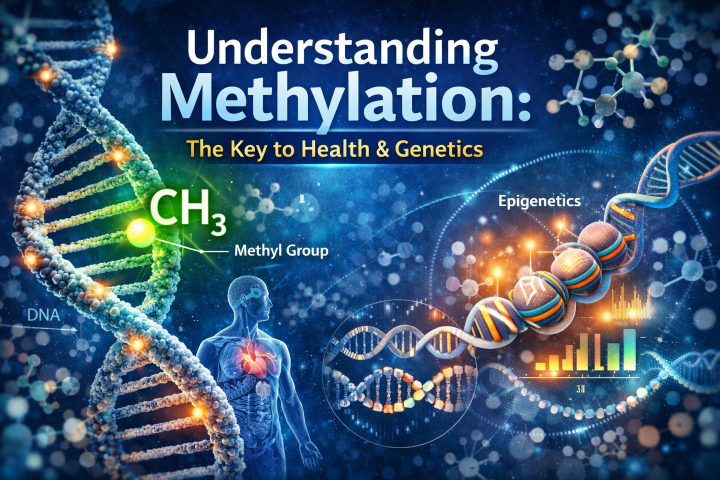
Methylation is a chemical process in which small molecular tags called methyl groups — each one a single carbon atom bonded to three hydrogen atoms — are attached to specific locations on the DNA strand. These attachment points are known as CpG sites, positions in the genome where a cytosine nucleotide is immediately followed by a guanine nucleotide. When a methyl group attaches to a cytosine at a CpG site, it acts like a dimmer switch: it typically suppresses the expression of genes in that region, effectively turning them down or off. Remove the methyl tag, and those genes become more active again.
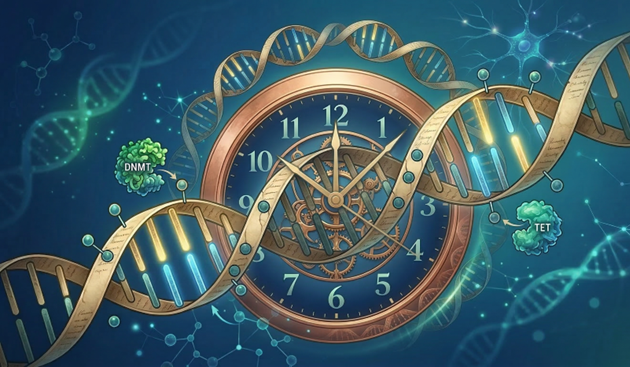
This process is carried out by a family of enzymes called DNA methyltransferases (DNMTs), which add methyl groups, and TET proteins, which remove them. The balance between these two enzyme families determines the methylation landscape of your genome at any given moment — a landscape that is not static, but constantly responsive to signals from your body and your environment. Many methylation marks are dynamic and can shift in response to lifestyle, environment, and age, though some marks are more stable across the lifespan. A 2025 review in MedComm described this epigenomic landscape as a central regulator of organismal decline and age-related diseases, noting that reversible epigenetic drift — including DNA methylation changes — constitutes one of the primary molecular mechanisms driving aging.
What makes methylation particularly powerful as a window into health is its pervasiveness. Every nucleated cell in your body carries a methylation pattern — a unique epigenomic signature shaped by age, tissue type, and the accumulated history of biological stress and repair. In the landmark 2023 Cell paper on the Hallmarks of Aging by López-Otín and colleagues, DNA methylation changes are identified as a central component of the “epigenetic alterations” hallmark — one of 12 core mechanisms of biological aging now recognized by the scientific community as amenable to intervention. Reading methylation patterns across thousands of sites simultaneously gives scientists an unprecedented resolution view of cellular health, biological age, and disease risk.
- DNA methylation involves the addition of methyl groups to CpG sites on the genome, regulating gene expression without altering the underlying DNA sequence — a process that is largely responsive to lifestyle, environment, and age.
- Two enzyme families govern the process: DNA methyltransferases (DNMTs) add methyl tags while TET proteins remove them, and the balance between them shapes your epigenomic health at the cellular level.
- DNA methylation changes are recognized as a central component of the “epigenetic alterations” hallmark of aging (López-Otín et al., Cell 2023) — one of 12 core mechanisms of biological aging amenable to intervention.
The Epigenetic Clock: Reading Biological Age from Methylation
The most transformative application of methylation science for human longevity came in 2013, when Dr. Steve Horvath, a geneticist and biostatistician at UCLA, published what has become one of the most cited papers in aging research. Working with an enormous dataset spanning multiple tissue types, Horvath identified 353 specific CpG sites whose methylation patterns change predictably with age across virtually all human tissues and cell types. By measuring the methylation status at these 353 locations, he could estimate a person’s biological age — what became known as Horvath’s Clock, or the DNA methylation age — with an accuracy that outperformed every prior molecular biomarker of aging, including telomere length.
The implications were immediately profound. Horvath’s Clock revealed that biological age and chronological age are not the same thing — and that the gap between them is meaningful. People whose biological age runs ahead of their chronological age show higher rates of all-cause mortality, cardiovascular disease, cancer, Alzheimer’s disease, and metabolic dysfunction. Those whose biological age runs younger enjoy measurably better health outcomes and longer lives. As Dr. Horvath summarized in his foundational Nature Reviews Genetics paper (2018), epigenetic clocks based on DNA methylation represent the most accurate molecular correlate of chronological age yet identified, and their deviation from chronological age captures biologically important variation in the pace of aging.
Since Horvath’s original clock, the field has expanded rapidly. Second-generation clocks — including PhenoAge (developed by Dr. Morgan Levine at Yale) and GrimAge — go further, predicting not just biological age but time-to-mortality, disease onset, and healthspan remaining. A sweeping 2023 Nature Aging study by Horvath’s group used 11,754 methylation arrays from 59 tissue types across 185 mammalian species to build universal pan-mammalian epigenetic clocks, confirming that age-related methylation changes are evolutionarily conserved across all mammals. Several studies also suggest that caloric restriction and fasting may slow epigenetic aging, though results vary by clock type and are more consistently demonstrated in animal models than in humans to date. A 2024 Nature Aging paper further validated a blood-based methylation clock that outperforms earlier clocks in predicting all-cause mortality across the Framingham Heart Study cohort.
- Steve Horvath’s 2013 discovery of the DNA methylation clock — measuring 353 CpG sites — created the first accurate molecular tool for estimating biological age across all human tissues.
- Biological age measured by methylation clocks predicts all-cause mortality, cardiovascular disease, cancer, and neurodegeneration more accurately than chronological age alone.
- Second-generation clocks (PhenoAge, GrimAge) and pan-mammalian clocks have confirmed that methylation-based aging is evolutionarily conserved, and several studies suggest that caloric restriction, exercise, and diet may favorably influence the epigenetic clock.
Methylation and the Machinery of Cellular Health
Beyond its role as a biological timekeeper, methylation is intimately involved in the day-to-day operation of your cells. Proper methylation patterns are essential for genome stability — they keep repetitive DNA sequences (called transposable elements) silenced and prevent them from jumping around the genome and creating mutations. They regulate the expression of tumor suppressor genes, keeping cancer-protective pathways active. They control inflammation by modulating the expression of cytokine genes. They govern stem cell differentiation — the process by which stem cells decide what kind of specialized cell to become. And they play a central role in brain function, influencing synaptic plasticity and cognitive resilience.
As we age — or as we are exposed to chronic stress, poor nutrition, environmental toxins, and sleep deprivation — two patterns of methylation disruption emerge simultaneously. Global hypomethylation occurs across the genome’s repetitive regions, destabilizing DNA and increasing genomic noise. At the same time, promoter hypermethylation silences specific tumor suppressor and longevity-associated genes that should remain active. A 2025 review in MedComm (PMC12402629) describes this dual pattern as the molecular fingerprint of epigenetic aging: the genome becomes simultaneously less controlled in places that should be silenced and more suppressed in places that should remain open. The result is cellular dysfunction, accelerated senescence, and elevated disease risk.
Nutrients that supply methyl groups — a biochemical process called one-carbon metabolism — are therefore not simply nutritional details. They are the raw materials your body uses to maintain epigenomic integrity. Folate, vitamin B12, choline, betaine, methionine, and SAMe (S-adenosylmethionine, the universal methyl donor) are all essential participants in this system. Nutrition strongly influences the methylation pathways that regulate epigenetic patterns, and when these key nutrients are insufficient, the machinery of methylation becomes impaired — and the biological clock can accelerate.
- Proper methylation silences genomic instability, activates tumor suppressor genes, moderates inflammation, and supports stem cell function — making it fundamental to cellular health at every level.
- Aging disrupts methylation in two simultaneous ways: global hypomethylation across repetitive genomic regions creates instability, while promoter hypermethylation silences protective longevity genes.
- Nutrition strongly influences the methylation pathways that regulate epigenetic patterns — folate, B12, choline, betaine, and SAMe are the molecular raw materials of epigenomic maintenance, and their adequacy or deficiency is directly reflected in methylation function.
The Landmark Trial: Early Evidence for Lifestyle and the Clock
Some of the most compelling evidence that methylation age can be deliberately influenced — not merely slowed — came from a pilot randomized controlled trial published in Aging (Albany NY) in 2021, led by Dr. Kara Fitzgerald and colleagues (PubMed PMID: 33844651). In this eight-week intervention involving 43 healthy adult males aged 50 to 72, the treatment group followed a program combining a methylation-supportive diet rich in folate and phytonutrients, regular exercise, sleep guidance, relaxation practices, and probiotic supplementation. Using the Horvath DNAmAge clock to assess biological age from saliva samples, the results were striking: the treatment group showed a 3.23-year decrease in biological age compared to controls after just eight weeks. The intervention also significantly raised serum 5-methyltetrahydrofolate levels, confirming that dietary changes were measurably influencing the methylation machinery.
This was one of the first randomized trials suggesting that targeted lifestyle changes may reduce epigenetic age — a meaningful finding even given the study’s small sample size and pilot design, which the authors themselves acknowledged as limitations requiring larger replication. It did not merely slow the clock; it repositioned CpG methylation patterns toward a signature associated with a younger biological age. Additional research has shown that omega-3 fatty acids and vitamin D supplementation may reduce GrimAge scores, that obesity and metabolic syndrome accelerate the clock, and that poor sleep consistently speeds it up. The picture is consistent and actionable: the methylation clock appears responsive to how you live, and the levers to influence it are accessible to almost everyone.
- A 2021 pilot RCT (Fitzgerald et al., PubMed PMID: 33844651) was one of the first randomized trials suggesting that an 8-week diet, exercise, sleep, and relaxation program may reduce biological methylation age — a promising finding that warrants replication in larger studies.
- Omega-3 fatty acids, vitamin D supplementation, and maintaining a healthy weight are associated with favorable methylation clock outcomes; several studies suggest caloric restriction and fasting may slow epigenetic aging, with animal evidence currently stronger than human data.
- Poor sleep, obesity, chronic stress, smoking, and metabolic syndrome consistently accelerate the DNA methylation clock — making these the most urgent modifiable targets for anyone seeking to protect their biological age.
What You Can Do: Supporting Healthy Methylation Every Day
Nourish the Methyl Donor Pathway
The most direct nutritional strategy for supporting healthy methylation is to supply the body with abundant methyl donor nutrients — the biochemical ingredients the methylation machinery requires to function. Folate is the foundation: found in leafy dark greens, lentils, asparagus, broccoli, avocado, and beets, it is the most important dietary methyl donor and the nutrient most directly tied to the methylation pathways studied in the Fitzgerald trial. Vitamin B12, found in animal proteins, eggs, and fortified foods, works alongside folate in the one-carbon metabolism cycle. Choline, found in eggs, liver, and cruciferous vegetables, and betaine, found in quinoa, spinach, and beets, provide additional methyl groups that support the pathway when folate is stressed. SAMe, available as a supplement, is the body’s universal methyl donor and has been studied for its role in maintaining methylation balance in aging tissues.
- Eat generous daily servings of folate-rich foods — dark leafy greens (spinach, kale, arugula), lentils, asparagus, broccoli, and avocado — as these are the primary dietary source of methyl groups for epigenomic maintenance.
- Ensure adequate vitamin B12 from whole food sources or supplementation, particularly if you follow a plant-based diet; B12 deficiency directly impairs the one-carbon metabolism cycle and may accelerate epigenetic aging.
- Include choline-rich foods (eggs, liver, edamame) and betaine sources (beets, quinoa, spinach) daily — these are often overlooked methyl donors that buffer the methylation pathway when folate supply is variable.
Lifestyle Factors That Protect and Restore Methylation
Beyond specific nutrients, the methylation clock is profoundly shaped by the broader architecture of your daily life. Exercise consistently shows favorable associations with epigenetic age across multiple clock systems, with both aerobic exercise and resistance training linked to slower methylation aging — likely through their effects on mitochondrial function, inflammation reduction, and AMPK activation. Several studies suggest that caloric restriction and intermittent fasting may slow the methylation clock, mirroring the life-extension effects observed in animal caloric restriction studies, though the human evidence base continues to develop. Chronic psychological stress is among the most potent accelerators of epigenetic aging, operating through cortisol-mediated disruption of DNMT activity and inflammatory cytokine production that alters methylation patterns across the genome. Chronic alcohol consumption, smoking, and environmental toxin exposure — particularly air pollution — have all been shown in PubMed-indexed studies to accelerate epigenetic aging through direct disruption of methylation patterns.
- Exercise regularly — both aerobic and resistance training — as both are associated with favorable epigenetic clock outcomes; even moderate, consistent activity is linked to measurable reductions in biological age acceleration across large population studies.
- Manage chronic stress as a direct methylation health priority: sustained psychological stress disrupts DNMT enzyme function, dysregulates methylation patterns genome-wide, and is one of the most robust predictors of accelerated epigenetic aging in published research.
- Avoid smoking entirely and limit alcohol to minimal levels; both directly disrupt methylation patterns at genomic loci associated with cancer suppression and are among the most potent accelerators of the epigenetic clock identified in large-scale population studies.
The Promise Ahead
The science of DNA methylation has transformed how researchers, clinicians, and increasingly individuals understand the aging process. What was once considered the irreversible march of time has been revealed as, at least in part, a responsive biological system — one that encodes the story of how you have lived, and that can be influenced going forward by how you choose to live. The Horvath Clock and its successors have given longevity medicine a tool it has never had before: a way to measure the impact of interventions in real time, to distinguish biological youth from chronological age, and to establish that the epigenome is a landscape we can cultivate rather than one we simply inherit.
The nutrients that feed the methylation pathway, the exercise that supports it, the sleep that allows it to repair, and the stress management that prevents its disruption are not exotic prescriptions. They are, once again, the ancient and unglamorous foundations of a life well-lived — now understood at a molecular resolution that gives them a new and deeper urgency. Your biology is not just listening to your choices. It is writing them down. The question is: what story do you want your cells to tell?
Key Research Citations
Horvath S, Raj K. DNA methylation-based biomarkers and the epigenetic clock theory of ageing. Nat Rev Genet. 2018;19(6):371–384. [PubMed PMID: 29643443]
Horvath S, et al. Universal DNA methylation age across mammalian tissues. Nature Aging. 2023;3:1144–1166.
Fuentealba M, et al. A blood-based epigenetic clock for intrinsic capacity predicts mortality. Nature Aging. 2025.
Lopez-Otin C, et al. Hallmarks of aging: an expanding universe. Cell. 2023;186(2):243–278. [PubMed]
Fitzgerald KN, et al. Potential reversal of epigenetic age using a diet and lifestyle intervention: a pilot randomized clinical trial. Aging (Albany NY). 2021;13(7):9419–9432. [PubMed PMID: 33844651]
Margiotti K, et al. Epigenetic Clocks: In Aging-Related and Complex Diseases. Cytogenet Genome Res. 2023;163(5-6):247–256.
Epigenetic Regulation of Aging and its Rejuvenation. MedComm. 2025. [PMC12402629]
Warner B, et al. A systematic review of phenotypic and epigenetic clocks used for aging and mortality quantification in humans. Aging. 2024. [PMC11424583]
Horvath S, et al. Epigenetic clock analysis of diet, exercise, education, and lifestyle factors. Aging (Albany NY). 2018. [PMC5361673]
Wu Z, Zhang W, Qu J, Liu GH. Emerging epigenetic insights into aging mechanisms and interventions. Trends Pharmacol Sci. 2024;45(2):157–172. [PubMed]